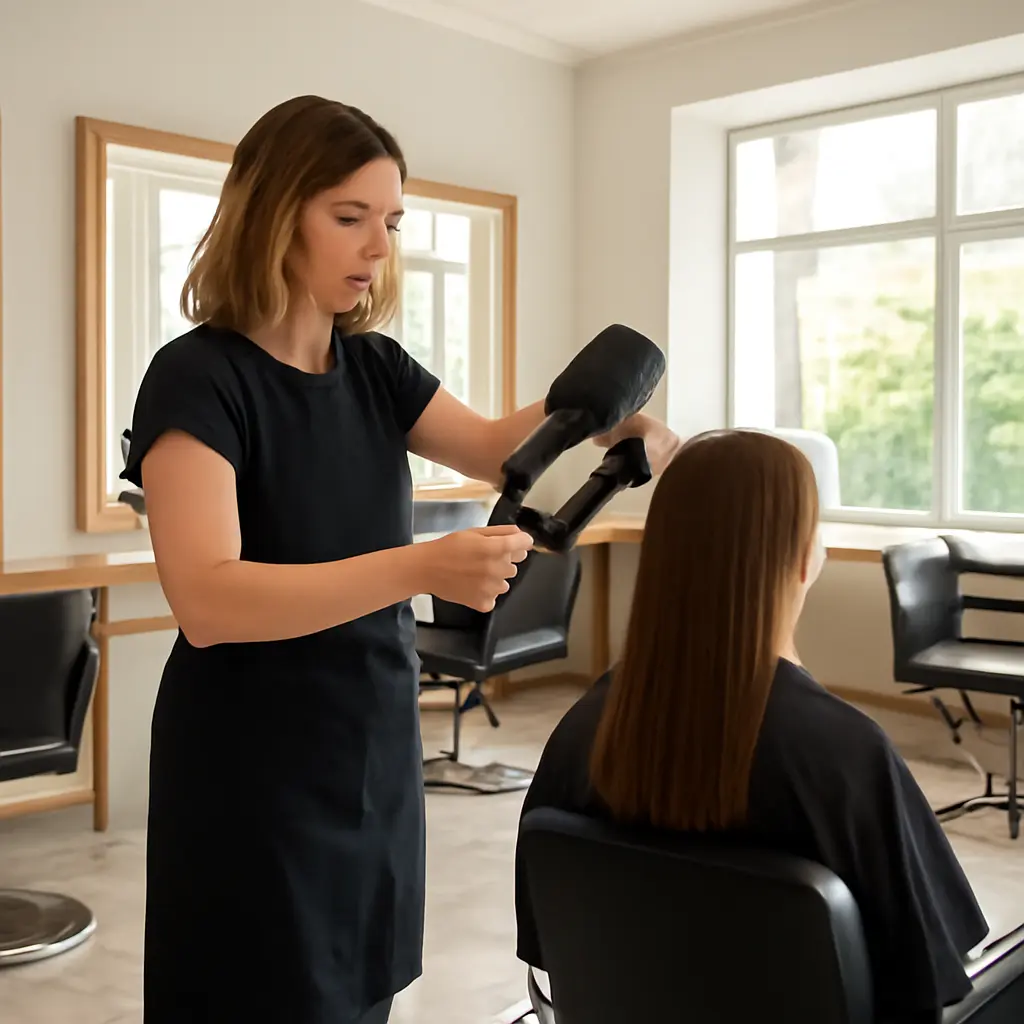

Smooth, polished hair without a greasy finish comes from controlling where product goes, using heat and tension strategically, and matching formulas to hair type. In salon practice, stylists typically apply lightweight products sparingly—often concentrating conditioner and oils on the mid-lengths and ends—then dry hair fully before adding a small amount of finishing product. That approach reflects a basic distinction: shine is light reflected from a smooth hair surface, while greasiness often comes from excess oil or product residue near the roots. The techniques below explain how stylists build smoothness, choose products, manage heat, and keep a blowout looking fresh.
Styling technique: how to create smooth hair without grease
“Smooth hair” is a styling result rather than a single hair type: strands look aligned, feel less rough, and reflect light more evenly. The American Academy of Dermatology (AAD) explains that the hair’s outer cuticle consists of overlapping scales; when that surface is damaged or raised, hair can appear dull and feel rough. Styling aims to reduce friction and help strands lie neatly, not to coat them in heavy product.
The key salon principle is placement before quantity. A stylist considers the scalp’s natural oil, the hair’s density and texture, and the finish requested, then uses product only where it can help. Lightweight leave-in conditioners, heat protectants, and carefully measured smoothing creams can support a polished finish; applying rich oils or creams at the roots can make the same hair look flat or oily.
Cleanse the scalp; condition the lengths
A clean foundation helps prevent styling products from combining with existing oil and residue. The AAD recommends shampooing according to how quickly the scalp becomes oily, applying shampoo mainly to the scalp, and using conditioner after washing. For fine or straight hair, conditioner can be focused on the ends; dry, curly, or textured hair may benefit from conditioning more of the length. This keeps the scalp clean without unnecessarily stripping the parts of the hair that need slip and softness.
Rinse thoroughly, especially around the nape and behind the ears, where conditioner can be easy to miss. If hair feels coated or loses volume soon after washing, check whether the formula is too rich or whether more rinsing is needed before adding another product.
Use lightweight products in targeted amounts
A heat protectant is a product intended to reduce some of the damage associated with heat styling; it does not make high heat harmless. Use it according to the label and distribute it evenly, rather than concentrating several layers of cream, serum, and oil in one area. A fine mist or lightweight lotion may suit fine hair, while thicker or curlier hair may handle a more conditioning formula. Hair products are not universally “grease-free”: the result depends on the formula, dose, hair, and application.
Stylists often emulsify a small amount of cream or serum between their palms and smooth it over the mid-lengths and ends. Keep heavier finishing oils away from the scalp unless the style or product directions specifically call for them. A practical test is to begin with less than you think you need, then add a little only to sections that still feel rough.
Blow-drying technique: smoothness through airflow and tension
A blowout is the controlled drying and shaping of hair with a dryer and brush. It can create a smooth finish without relying on a heavy coating of product because the stylist guides each section as it dries. The process works best when hair is towel-dried gently, divided into manageable sections, and dried until fully dry; damp roots or lengths can quickly undermine a polished result.
Prepare hair without rough handling
Wet hair is more vulnerable to stretching and breakage than dry hair. The AAD advises handling wet hair gently and using a wide-tooth comb to detangle, starting at the ends and working upward. Blot or squeeze out excess water with a towel instead of vigorously rubbing. This reduces tangling and gives the dryer less work to do.
Apply the chosen heat protectant evenly, then detangle before sectioning. For a smoother result, make sections small enough that the brush can control the hair without excessive pulling. If hair is very dense, drying it in orderly layers can be more effective than aiming hot air at the whole head at once.
Direct airflow down the hair shaft
Stylists generally point the dryer nozzle from the roots toward the ends while following the brush. This aligns the cuticle surface and reduces flyaways compared with blowing hair in random directions. Keep the dryer moving and use a moderate setting that can dry the section effectively without prolonged exposure to intense heat.
The AAD recommends limiting heat styling and using the lowest effective heat setting. Its guidance also warns that frequent heat styling can damage hair. There is no single temperature or drying time that is safe for every head of hair: strand size, condition, moisture, tool design, and technique all matter. Avoid holding a hot tool still on one spot, and let each section cool before brushing it out or pinning it in place.
Choose the brush for the finish
A round brush adds shape and tension for a fuller, polished blowout; a paddle brush tends to create a straighter, softer finish. The right choice depends on length, density, and the desired movement. Tension should be steady rather than painful: pulling too hard can stress the hair and scalp without guaranteeing a smoother result.
Finishing products: shine without a coated feel
Once hair is completely dry, a stylist assesses the finish before adding anything else. This matters because many products look more concentrated when applied to damp hair, and layering can leave a film that attracts dust or makes strands clump together. The aim is to address a specific need—flyaways, dry ends, or humidity—rather than applying a product automatically.
Serum and oil: use sparingly on the ends
Serums and hair oils can add slip and shine, but they are not interchangeable, and their weight varies by formula. For a light finish, warm a tiny amount between the hands and skim it over the ends or the outer surface of the hair. Avoid repeatedly coating the same section. If hair turns stringy, limp, or darker-looking after application, the dose is likely too high for that hair.
Hairspray and anti-frizz products: target the problem
Flexible-hold hairspray can help a style last while preserving movement; a small amount on a brush can tame surface flyaways more precisely than spraying heavily at close range. Anti-frizz creams and sprays can help manage humidity, but they should be chosen for the hair’s texture and used as directed. Too many layers can create buildup, so clarify or wash when hair begins to feel coated rather than trying to disguise the residue with more product.
Hair type and scalp: why the same routine can look different
A routine that gives one person glossy, light hair may leave another person flat or still frizzy. Fine hair has less room for rich products before losing lift; coarse, curly, or highly textured hair may need more conditioning to reduce friction and support definition. Scalp oil production, hair density, color or chemical processing, and the local climate also influence the result.
Fine or straight hair
Use a lightweight conditioner and keep leave-in products mostly on the ends. Dry the roots fully for lift, and avoid applying oil or thick cream near the scalp. If the style collapses quickly, consider using less product and washing at a frequency suited to the scalp rather than adding more dry shampoo or serum.
Thick, curly, or textured hair
These hair types may need more conditioning and careful detangling to reduce friction and help strands sit smoothly. Work in sections and choose products that provide enough slip without leaving a heavy residue. Smoothness does not have to mean pin-straight hair: a stylist can reduce frizz while preserving curl pattern and volume.
Dry or chemically treated hair
Coloring, relaxing, bleaching, and repeated heat styling can make hair more vulnerable to roughness and breakage. Use heat conservatively, avoid repeatedly passing a hot tool over the same section, and ask a stylist to tailor the service to the hair’s condition. The AAD advises that damaged hair cannot be repaired back to its original state, making prevention and gentle handling important.
Common causes of greasy-looking smooth hair
Greasy-looking hair does not always mean the scalp is producing unusually large amounts of oil. It can also result from product buildup, conditioner left near the roots, applying oil to damp hair in excess, or touching and brushing hair repeatedly. The quickest correction is usually to identify the source rather than add another layer of styling product.
- Keep conditioner and rich masks away from the scalp unless the product directions or a stylist recommend otherwise.
- Use one finishing product at a time and start with a small amount.
- Rinse thoroughly and clean brushes regularly so old product and oil are not redistributed.
- Use dry shampoo only as a temporary styling aid, following its directions; it does not replace washing the scalp.
- Reduce heat and product layering if hair feels brittle, coated, or unusually flat.
If persistent oiliness comes with itching, scaling, redness, or discomfort, styling changes may not address the cause. The AAD recommends seeking a dermatologist’s advice for ongoing scalp or hair concerns.
A practical stylist-inspired smooth-hair routine
- Shampoo the scalp as needed and condition the lengths according to texture and dryness.
- Gently blot excess water, detangle from the ends upward, and apply a suitable heat protectant.
- Divide hair into sections and blow-dry with controlled tension, directing air from roots to ends.
- Let hair cool and check whether it needs any finishing product.
- Apply a minimal amount of serum, oil, or flexible hairspray only where needed.
- At the next wash, remove buildup rather than covering it with additional product.
This routine is a starting point, not a universal prescription. For example, someone with fine, straight hair may need only a lightweight protectant and a trace of serum on the ends, while someone with dense curls may need a richer leave-in and a different drying method. The shared principle is the same: use the least product that achieves the desired finish and control heat rather than relying on it to compensate for buildup.
Conclusion: smooth hair depends on control, not coating
Stylists create smooth hair without a greasy finish by starting with a clean scalp, conditioning where hair needs it, applying lightweight products selectively, and guiding airflow with a brush. Heat should be used at the lowest effective setting and kept moving, while finishing oils and serums belong mainly on the lengths and ends in small amounts. Match the routine to hair texture and condition, and treat persistent scalp symptoms as a health concern rather than a styling problem. For tailored advice, ask a professional stylist to assess your hair and demonstrate product placement and drying technique.
Sources: American Academy of Dermatology Association, Hair styling without damage, https://www.aad.org/public/everyday-care/hair-scalp-care/hair/hair-styling-without-damage; American Academy of Dermatology Association, Tips for healthy hair, https://www.aad.org/public/everyday-care/hair-scalp-care/hair/healthy-hair-tips; American Academy of Dermatology Association, How to stop damaging your hair, https://www.aad.org/public/diseases/hair-loss/insider/stop-damage.