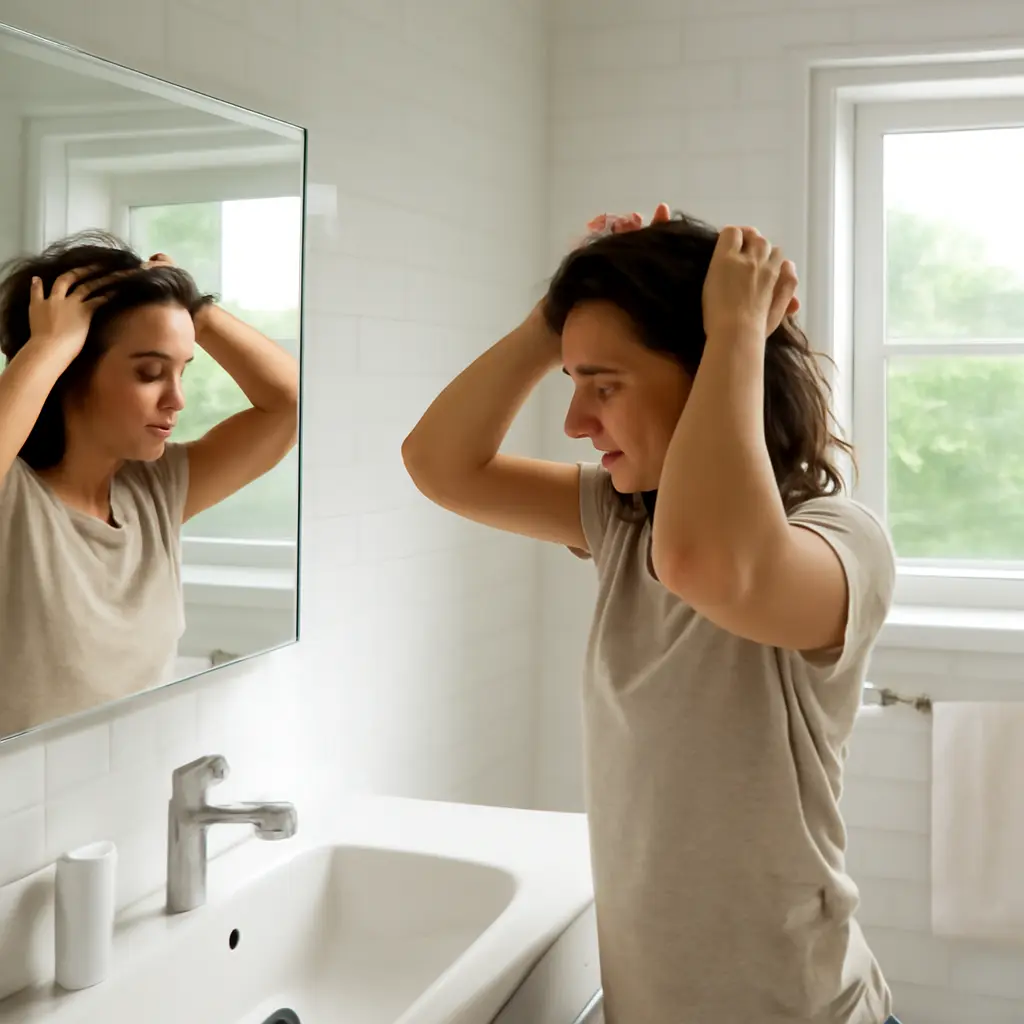

Curly-hair scrunching is a styling technique that encourages natural curl and wave patterns by gently squeezing wet, product-coated hair upward toward the scalp. For definition that lasts, scrunch in sections while hair is wet, use a curl-friendly styler, remove excess water without rough friction, and dry without disturbing the curl clumps. The method matters: the American Academy of Dermatology advises handling wet hair gently because it is more prone to breakage, while the National Weather Service explains that humidity affects how moisture moves through the air—one reason curls may lose their shape on damp days. Below, learn what effective scrunching involves, how to adapt it to different hair patterns, and how to troubleshoot frizz and fading definition.
Scrunching Technique and Curl Definition
Scrunching is a mechanical styling action: gather the ends of a section of hair in your palm and gently press them upward toward the roots, then release. It can help encourage waves and curls to form into visible clumps, but the result also depends on hair condition, product choice, moisture, and drying technique. There is no single scientifically established scrunching motion or universal product formula that guarantees all-day definition; hair texture and the surrounding environment vary.
Wet-hair scrunching
Wet-hair scrunching means shaping curls while hair is saturated or very damp, often after applying leave-in conditioner or a styling product. Wet strands tend to slide into curl groups more readily than dry strands, so this is usually the best time to encourage clumping. Apply product evenly with open hands, then scrunch upward gently from the ends. Avoid crushing or twisting the hair into a tight ball, which can disrupt clumps and create tangles.
Product-assisted scrunching
Product-assisted scrunching uses a styling product to help curls retain their shape as they dry. A lightweight mousse or gel can provide hold; leave-in conditioner may help with softness and slip, especially when hair feels dry or tangles easily. Product needs differ, so start with a small amount and adjust rather than layering heavily. The American Academy of Dermatology recommends choosing hair-care products suited to an individual’s hair type and handling hair gently to reduce damage; it does not prescribe a specific curl-styling routine.
Diffuser and air-dry scrunching
Air-dry scrunching lets hair dry without heat, while diffuser scrunching uses a diffuser attachment to distribute a blow-dryer’s airflow more gently than directing a concentrated stream at curls. With either method, minimize touching while hair dries: repeated handling can separate curl clumps and encourage frizz. If using a dryer, choose a comfortable, low or moderate heat setting and stop once the hair is dry. A diffuser is a tool, not a guarantee of longer-lasting definition.
Hair Pattern and Scrunching Methods
Hair pattern describes the shape strands naturally form, commonly grouped as straight, wavy, curly, or coily. These categories can be useful for describing styling needs, but a person may have more than one pattern, and no chart can fully capture density, strand thickness, porosity, or damage. Adapt the scrunching approach to the way your hair responds rather than treating a category as a strict rule.
Scrunching wavy hair
Wavy hair often benefits from a light hand and lighter styling products, since too much product or water can weigh down the pattern. Apply a modest amount of mousse or gel to damp lengths, then scrunch upward in sections. If the roots fall flat, focus product and scrunching on the mid-lengths and ends rather than coating the scalp.
Scrunching curly hair
Curly hair often forms more defined clumps when styling product is distributed evenly before scrunching. Work in manageable sections, keeping the hair wet enough to move freely. Press upward gently and release; if a section looks stringy or separated, add a little water and smooth product over it before scrunching again.
Scrunching coily hair
Coily hair can have tight bends and turns that make moisture retention and gentle detangling important considerations. Scrunching may encourage existing curl or coil groupings, but it is not a substitute for detangling or a technique that every coily routine needs. Use ample slip when detangling, work in sections, and avoid forceful squeezing that pulls at the roots or knots the ends.
Long-Lasting Curl Definition and Common Mistakes
Lasting definition is the outcome of a sequence: prepare the hair, distribute product, form curl clumps, and let them dry with minimal disturbance. In a humid environment, hair can absorb moisture from the air, which may alter the feel and shape of a style. The National Weather Service describes humidity as the amount of water vapor in the air; it does not provide a universal prediction for how a particular person’s curls will respond.
Scrunching too roughly
Rough scrunching can disrupt curl clumps, increase tangling, and place unnecessary stress on wet strands. The American Academy of Dermatology notes that wet hair is more fragile and advises gentle handling. Instead of rubbing with a towel or squeezing tightly, press the hair upward with your palms or use a soft T-shirt or microfiber towel to blot and scrunch lightly.
Using too much or too little product
Excess product can make some hair feel coated or limp, while too little hold may leave curls more vulnerable to losing their shape. Start with a small amount, distribute it across damp sections, and observe the result after drying. If curls feel stiff from gel, wait until they are fully dry and gently scrunch the cast—rather than the wet hair—to soften it.
Touching curls before they dry
Handling curls repeatedly during drying can pull apart the groups formed during styling. After scrunching, leave the hair alone until it is completely dry. If you diffuse, cup a section in the diffuser and move slowly, avoiding constant rearranging. Once dry, gently scrunch out any firm product cast with clean, dry hands.
Ignoring humidity and daily conditions
Weather, sweat, friction from clothing, and contact with pillows can all affect how a style holds. On humid days, try a product with more hold and reduce unnecessary handling; in dry conditions, hair may benefit from a routine that supports softness without overloading the strands. These are practical adjustments rather than guaranteed fixes, since individual hair response differs.
A Practical Scrunching Routine
For a simple starting point, follow these steps and adjust one variable at a time—such as product amount or drying method—so you can identify what works for your hair.
- Cleanse and condition according to your usual routine, then detangle gently while the hair has slip.
- Keep the hair wet or evenly damp and divide it into manageable sections.
- Apply a small amount of styling product, distributing it through each section.
- Scrunch upward from the ends with a gentle, open-handed motion.
- Blot excess water if needed, then air-dry or diffuse while disturbing the curl clumps as little as possible.
- Wait until the hair is completely dry before touching or softening a product cast.
A simple comparison can help you refine the routine: note whether hair was wet or damp, the product amount, drying method, and how the definition looked later in the day. This informal tracking is more useful than assuming that one viral technique will work for every curl pattern.
Conclusion: Gentle Scrunching for Definition That Lasts
Effective scrunching is gentle, deliberate, and suited to the hair’s pattern and condition. Wet-hair scrunching helps shape curl clumps; product-assisted scrunching can add hold; and careful air-drying or diffusing helps preserve the shape. Avoid rough handling, excess product, and touching curls before they dry, then account for humidity and daily friction. Try the routine in sections, change one factor at a time, and consult a dermatologist if you have persistent scalp concerns or significant breakage.
Sources: American Academy of Dermatology Association, Hair styling without damage, https://www.aad.org/public/everyday-care/hair-scalp-care/hair/hair-styling-without-damage; National Weather Service, JetStream: Relative Humidity, https://www.weather.gov/jetstream/relative_humidity.