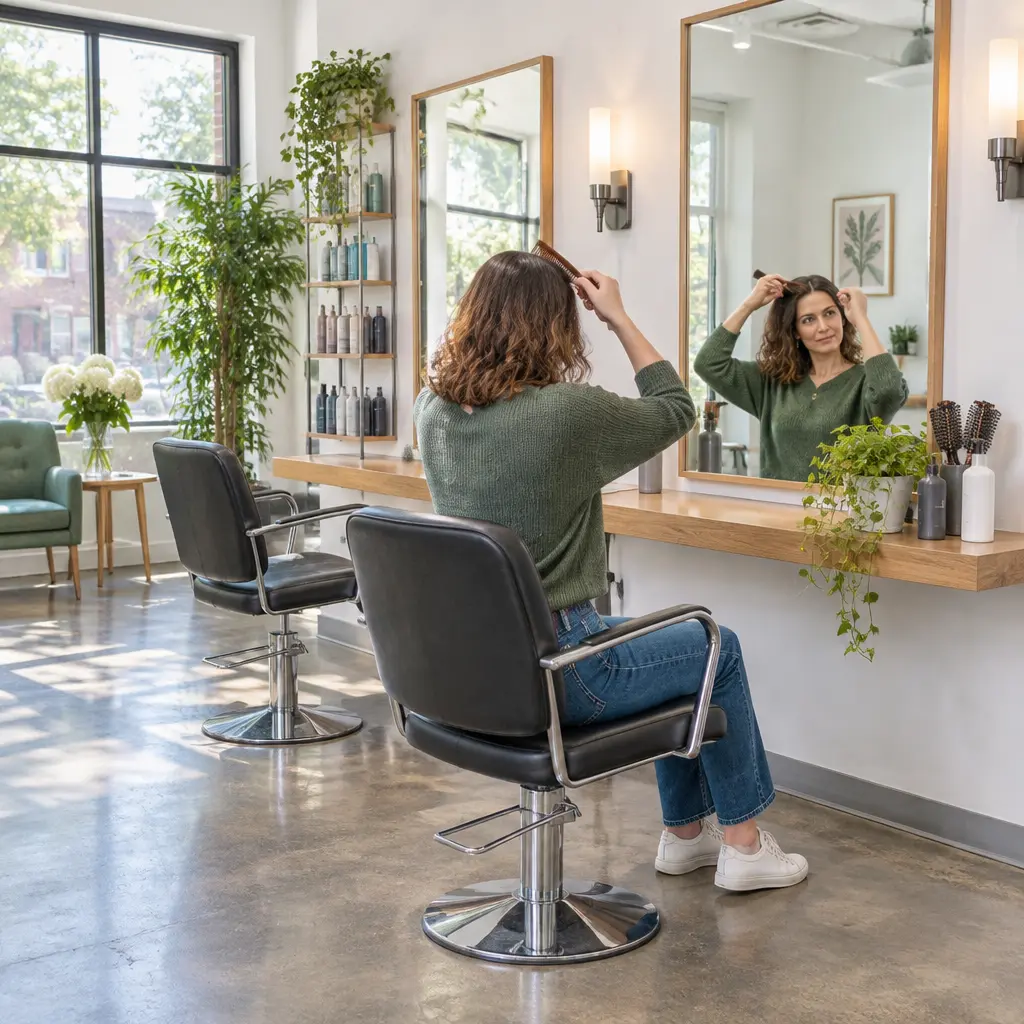

Hair is more than a biological feature: it is a visible, changeable part of personal identity, shaped by culture, history, social expectations, and individual choice. Personal identity refers to the ways people understand and express who they are; hair can communicate ethnicity, faith, gender, belonging, or personal style, while also becoming a site of discrimination and political debate. Research on Black women’s hair, religious covering, and workplace grooming rules shows that these meanings have consequences beyond appearance. Understanding the connection helps explain why hair choices can matter deeply—and why fair policies should distinguish genuine safety needs from biased standards of “professional” appearance.
Hair and Personal Identity: How Appearance Communicates the Self
Hair is a feature that grows from the body and can be cut, covered, styled, or left natural. Personal identity is a person’s sense of self and the characteristics through which they interpret and present that self to others. The connection between hair and identity is not universal or fixed: the meaning of a hairstyle depends on the person, community, historical moment, and setting. Hair may be a source of pride, creativity, and continuity, but it can also expose people to stereotyping or pressure to conform.
The issue is socially significant as well as personal. In a 2019 Dove and CROWN Coalition survey of 1,000 Black women aged 25–54 in the United States, 80% said they had to change their hair from its natural state to fit in at the office. The survey is not a measure of every workplace or population, but it illustrates how appearance standards can affect self-expression and access to opportunity. The sections below examine hair as cultural communication, individual expression, and a matter of rights and inclusion.
Communicates Hair and Personal Identity Through Culture and Belonging
Hair communicates identity when people use its texture, styling, length, or covering to express or maintain social meaning. Sociologist Rose Weitz, in her work on hair and identity, describes hair practices as shaped by cultural norms and as meaningful forms of self-presentation. This definition emphasizes that hair does not carry one innate message: people interpret it through shared customs and social context. Cultural expression, ethnic identity, religious practice, and group belonging are related forms of this connection.
Ethnic and cultural identity
Hair can connect a person to community histories, inherited practices, and experiences of racialization. For many people of African descent, natural textures and styles such as locs, braids, and twists can express cultural continuity and self-definition. At the same time, dominant beauty standards have often treated straight hair as more acceptable or “professional,” placing an unequal burden on people whose natural hair differs from that norm. The 2019 Dove and CROWN Coalition survey found that Black women reported changing their hair to fit in at work, illustrating the tension between cultural expression and institutional expectations.
Religious practice and modesty
For some people, hair practices are connected to religious obligation, modesty, or spiritual discipline. A Sikh may maintain uncut hair as part of religious practice; some Muslim women cover their hair with a hijab; and some Orthodox Jewish women cover their hair after marriage. These practices differ in meaning and observance, and individuals within the same faith may make different choices. Treating a religious hairstyle or covering as a voluntary fashion statement alone can overlook its significance to the wearer.
Community belonging and shared style
Shared hairstyles can signal affiliation with a family, community, generation, or social movement. The meaning may be affectionate and communal, but it can also change as styles move between groups or become commercially popular. Cultural appropriation debates often arise when a style associated with a marginalized community is adopted without recognition of its history, especially while people from that community continue to face stigma for wearing it. Context, power, credit, and consequences all matter when interpreting such choices.
Expresses Hair and Personal Identity Through Individual Choice
Hair expresses personal identity when people use grooming and styling to make visible choices about how they want to appear and feel. These choices may reflect creativity, comfort, gender, age, or a change in life circumstances. Unlike some identity markers, hair is often alterable, but the ability to change it does not mean that doing so is emotionally or culturally insignificant. Personal choice is shaped by available time, money, health, social acceptance, and workplace or family expectations.
Style, creativity, and self-presentation
A haircut, color, or style can function as everyday self-presentation: a person may choose a look to feel polished, playful, understated, dramatic, or connected to a particular scene. Hair’s visibility makes it a readily noticed part of appearance, yet observers can misread it. A bright color, shaved head, or elaborate style does not reliably disclose someone’s personality, politics, or values. Respecting self-expression therefore includes avoiding assumptions based solely on appearance.
Gender expression and changing identity
Hair can help people express or question gender expectations. Long hair, short cuts, facial hair, and styling conventions are culturally coded in different ways, but those codes are not universal rules. Transgender and nonbinary people may use hair to bring outward presentation into closer alignment with their gender, while others may reject conventional gendered styles altogether. A hairstyle can be meaningful without being a definitive indicator of gender identity; people’s own descriptions of themselves take precedence over appearance-based guesses.
Life changes, health, and hair loss
Hair can also become important when it changes beyond a person’s control. Alopecia, illness, medication, aging, or hormonal changes may alter hair growth, and the effects can involve self-image, grief, privacy, and social interaction. People respond differently: some cover hair loss, some use wigs or other styling options, and others embrace a changed appearance. The National Institute of Arthritis and Musculoskeletal and Skin Diseases describes alopecia areata as an autoimmune disease that causes hair loss; this medical explanation helps distinguish a health condition from a deliberate style choice.
Shapes Hair and Personal Identity Through Social Rules and Rights
The relationship between hair and identity becomes especially consequential when schools, employers, or public institutions regulate appearance. A grooming policy is a rule about how hair or other aspects of appearance must be maintained. Such rules may address legitimate safety or hygiene needs, but standards such as “neat,” “conventional,” or “professional” can be applied unevenly. The CROWN Coalition’s workplace survey findings help show why seemingly minor rules can impose disproportionate pressure on particular groups.
Workplace and school appearance policies
Appearance policies influence identity when they require people to conceal, alter, or avoid hairstyles associated with culture or faith. A rule that prohibits locs or braids without a clear job-related reason may constrain expression and reinforce narrow beauty standards. Conversely, protective equipment requirements can be necessary in some workplaces; fair policy design should identify the actual hazard and allow safe accommodations where possible. Employers and schools can make rules more equitable by using specific, job-related criteria rather than subjective judgments about which textures or styles look acceptable.
Discrimination and legal protections
Hair discrimination occurs when people face unequal treatment because of hair texture, style, or a related cultural or religious practice. In the United States, federal civil-rights protections prohibit discrimination based on race, and the Equal Employment Opportunity Commission explains that race discrimination can involve characteristics associated with race, including hair texture and hairstyles. State and local protections vary. The CROWN Act, first enacted in California in 2019, specifically addresses discrimination based on hair texture and protective hairstyles in covered settings; other jurisdictions have adopted their own versions. Legal coverage depends on location and circumstances, so the law should be checked locally.
Representation and media narratives
Media representation affects which hairstyles are treated as ordinary, beautiful, or authoritative. When a narrow range of hair textures dominates advertising, entertainment, or leadership imagery, people may receive the message that their own appearance is less acceptable. Broader representation can expand the visible range of professional and attractive styles, although representation alone cannot eliminate discriminatory policies or unequal treatment. Schools, employers, and media organizations can support inclusion by showing varied hair textures and styles without presenting one as the default standard.
Conclusion: Respecting Hair as Part of Personal Identity
Hair and personal identity are connected through culture and belonging, individual self-expression, and the social rules that determine which appearances are accepted. Hair can carry religious, ethnic, gendered, and personal meaning, while changes in health or life circumstances can reshape how a person experiences it. Evidence such as the Dove and CROWN Coalition workplace survey underscores that appearance norms can have practical effects, not merely aesthetic ones.
A more respectful approach begins by listening to how people describe their own hair, avoiding assumptions, and reviewing grooming policies for necessity and fairness. Readers can learn about local CROWN Act protections, consult credible cultural and medical sources, and support schools and workplaces that accommodate difference without compromising genuine safety. Recognizing hair as a meaningful part of identity helps create environments where people are not asked to trade dignity or belonging for acceptance.
Sources: Dove and CROWN Coalition, The CROWN Research Study, 2019, https://www.dove.com/us/en/stories/campaigns/crown-research-study.html; Rose Weitz, “Women and Their Hair: Seeking Power through Resistance and Accommodation,” Gender & Society, 2001, https://doi.org/10.1177/089124301015004006; National Institute of Arthritis and Musculoskeletal and Skin Diseases, Alopecia Areata, https://www.niams.nih.gov/health-topics/alopecia-areata; U.S. Equal Employment Opportunity Commission, Hair Discrimination, https://www.eeoc.gov/laws/guidance/hair-discrimination; The CROWN Act, The CROWN Act, https://www.thecrownact.com/