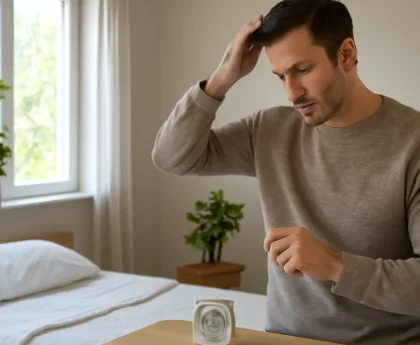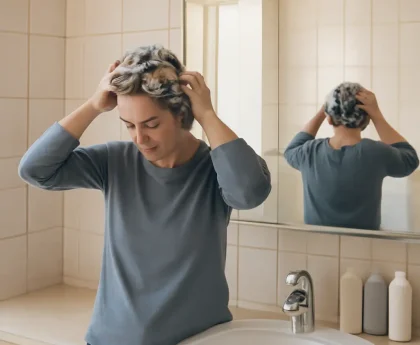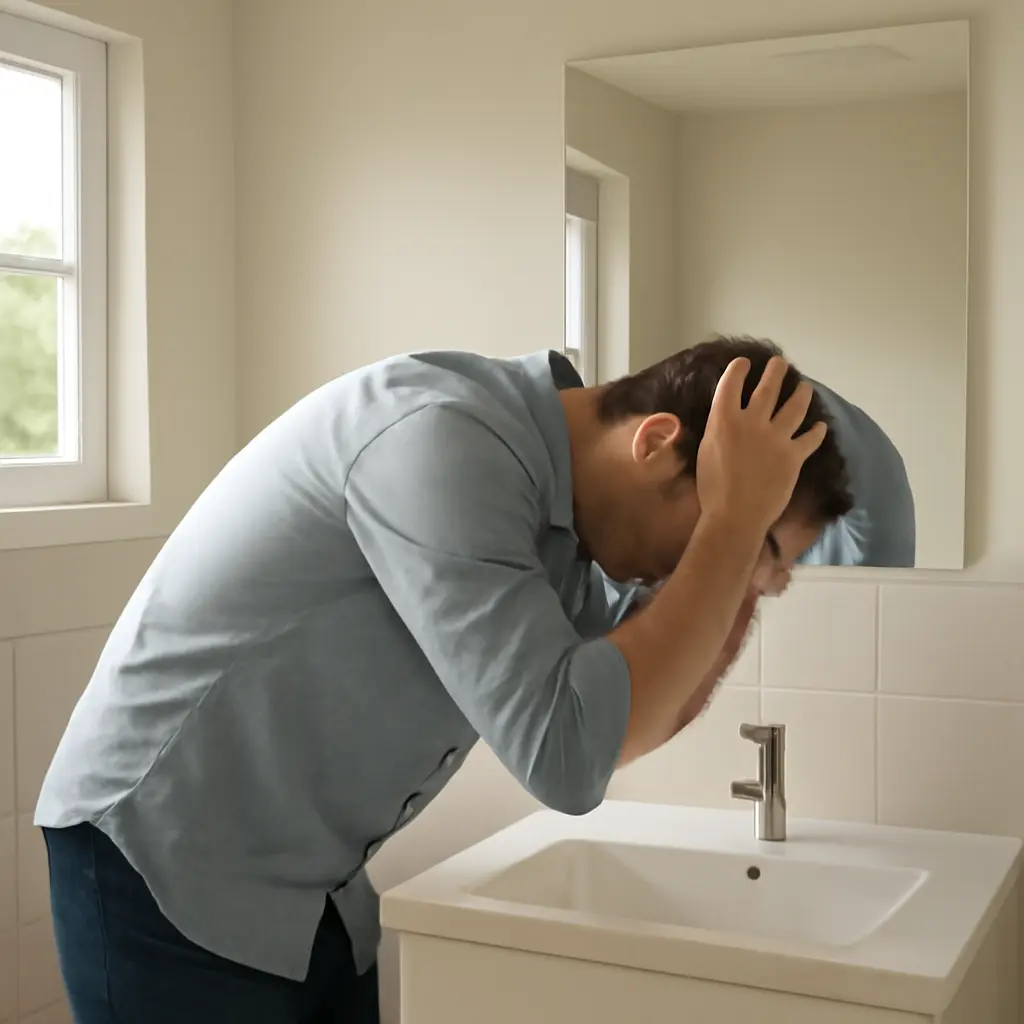

Hair gel is a styling product that holds hair in place through film-forming ingredients such as polymers. Leaving it in overnight is usually not an emergency for a healthy scalp, but dermatologists generally recommend removing styling products before bed when practical: dried gel can contribute to buildup, irritation, or breakage, especially when combined with tight hairstyles or vigorous brushing. The risk depends on the formula, how much you use, your scalp’s sensitivity, and whether you sleep with wet or stiff hair. Here’s what dermatology guidance says about scalp effects, hair damage, product ingredients, and safer overnight habits.
Hair gel overnight: what dermatologists say about scalp and hair
There is no universal dermatology rule that one night of hair gel will harm everyone’s hair. The American Academy of Dermatology (AAD) advises people with itchy or flaky scalps to consider hair-care products as possible irritants and to simplify their routine when symptoms occur. In practice, the main concerns are product residue, contact irritation or allergy, and mechanical damage from handling hair that is stiff or tangled—not that gel automatically blocks the scalp or causes hair loss.
These effects are individual. A person with a comfortable scalp and a small amount of gel may notice nothing after sleeping in it, while someone sensitive to fragrance or preservatives may develop itching or a rash. No reliable statistic establishes a particular number of nights that is safe for everyone, so symptoms and product instructions matter more than a fixed overnight cutoff.
Scalp buildup and irritation
Buildup is residue left by styling products, natural oils, and skin flakes. Gel can contribute to residue, particularly when reapplied without washing or when a formula is heavy or difficult to rinse out. Buildup may make hair feel coated and can aggravate discomfort in some people, but it is not accurate to say that ordinary gel use necessarily “clogs” every scalp or causes hair loss.
Irritant contact dermatitis is inflammation caused by direct exposure to a substance; allergic contact dermatitis is an immune reaction to an ingredient. Either may cause itching, redness, burning, or a rash where the product touches skin. The AAD recommends stopping a suspected product if it triggers a reaction. Persistent symptoms, swelling, or a spreading rash warrant medical advice rather than repeated experimentation with styling products.
Hair breakage and stiffness
Hair breakage means the hair shaft snaps; it is different from shedding of hairs from the follicle. Gel can leave hair stiff, and forcefully brushing, combing, or scrunching stiff strands may increase friction and breakage. The risk is more relevant when hair is already fragile, chemically processed, tightly curled, or pulled into a tight style. The AAD’s hair-care advice emphasizes gentle handling and avoiding repeated tension because styling practices can contribute to damage and traction-related hair loss.
Gel on the hair versus gel on the scalp
Application location changes the likely exposure. Gel placed mainly on hair lengths may have less direct contact with scalp skin than gel worked into the roots, hairline, or temples. However, products can transfer to skin during application or while sleeping. If you are prone to irritation, use less, keep it off the scalp where possible, and discontinue it if symptoms appear.
Hair gel overnight: ingredients and product differences
Hair gels are not all alike. Their hold and feel depend on combinations of water, film-forming polymers, conditioning agents, solvents, preservatives, and sometimes fragrance. The U.S. Food and Drug Administration (FDA) notes that cosmetics generally do not receive FDA approval before sale, with certain exceptions such as color additives; manufacturers are responsible for product safety and proper labeling. That makes checking the ingredient list and following the label sensible, particularly for people with known sensitivities.
Fragrance and preservatives
Fragrance and preservatives help provide a pleasant scent and protect a product from microbial contamination, but some individuals react to particular ingredients. A product labeled “unscented” may still contain masking fragrance, whereas “fragrance-free” products are intended to avoid fragrance ingredients; labels and formulations can vary. If you repeatedly develop a rash after using hair products, a dermatologist can assess whether allergic contact dermatitis is involved and may recommend patch testing.
Alcohol-containing and high-hold formulas
Some gels use alcohols or other volatile ingredients to help a formula dry quickly. The word “alcohol” does not describe one single ingredient or guarantee that a product will dry out everyone’s hair: fatty alcohols, for example, behave differently from short-chain alcohols. High-hold gels can also leave a firmer cast. Rather than judging by one ingredient name alone, consider how your hair and scalp respond, and follow product directions.
Water-based and leave-in products
Water-based gel may rinse out more readily than some heavy or wax-rich styling products, but “water-based” does not mean irritation-proof or automatically suitable for overnight use. Leave-in styling products are designed to remain on hair for a period of time, yet their directions still matter. Choose a product intended for your hair type, use the smallest amount that works, and avoid layering product night after night without cleansing when residue or discomfort develops.
Hair gel overnight: safer routines and what to do in the morning
If you occasionally fall asleep with gel in your hair and have no irritation, there is generally no reason to panic. A practical routine is to prevent unnecessary scalp exposure, avoid sleeping with hair pulled tightly, and cleanse when your hair feels coated or your scalp becomes uncomfortable. Washing frequency should suit your scalp and hair; the AAD recommends shampooing according to how oily or dirty the scalp gets rather than following one schedule for everyone.
Before bed
- Use only as much gel as needed and avoid applying it directly to irritated or broken skin.
- Loosen tight ponytails, braids, or buns to reduce sustained pulling on the hairline.
- Do not aggressively brush hair while the gel is stiff; loosen it gently with fingers or a wide-tooth comb if needed.
- If you regularly wake with itching or residue, try washing the product out before sleep or switching to a simpler formula.
In the morning
If the hair feels clean and the scalp is comfortable, you do not necessarily need an extra wash solely because gel was worn overnight. If it feels sticky, coated, or uncomfortable, wash the scalp with a shampoo suited to your hair and rinse thoroughly. Avoid scraping or forcefully combing out hardened product; soften it with water and handle the hair gently. A flaky or itchy scalp that continues despite stopping the suspected product may have causes other than gel, such as dandruff or another skin condition, and deserves clinical assessment.
When to seek professional advice
Stop using the product and seek medical advice for a persistent or severe rash, marked swelling, painful irritation, or symptoms that keep returning. Sudden or ongoing hair loss should also be evaluated rather than attributed automatically to gel. A dermatologist can distinguish scalp inflammation, hair-shaft breakage, traction-related loss, and other causes and can advise whether ingredient testing is appropriate.
Conclusion: hair gel overnight is usually a matter of tolerance and routine
Dermatology guidance does not support a blanket claim that sleeping with hair gel once will damage everyone’s hair. The meaningful considerations are scalp sensitivity, residue, formula, and how stiff or tangled hair is handled. Use gel sparingly, follow its label, reduce direct scalp contact if irritation is a concern, and wash when buildup or discomfort appears. If itching, rash, or hair loss persists, stop the suspected product and consult a dermatologist. For individualized guidance, review the AAD’s hair-care resources and ask a clinician about recurring reactions.
Sources: American Academy of Dermatology Association, “Hair care: How to keep your hair healthy,” https://www.aad.org/public/everyday-care/hair-scalp-care/hair/hair-care; American Academy of Dermatology Association, “Eczema types: Contact dermatitis overview,” https://www.aad.org/public/diseases/eczema/types/contact-dermatitis/overview; U.S. Food and Drug Administration, “Cosmetics: Laws & Regulations,” https://www.fda.gov/cosmetics/cosmetics-laws-regulations/cosmetics-laws-regulations