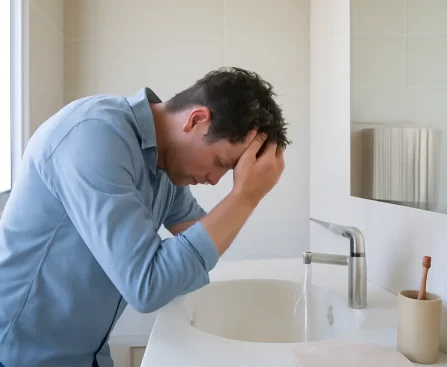
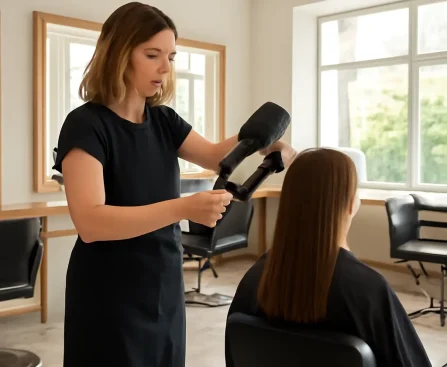
Hair gel is a styling product that holds hair in place through film-forming ingredients such as polymers. Leaving it in overnight is usually not an emergency for a healthy scalp, but dermatologists generally recommend removing styling products before bed when practical: dried gel can contribute to buildup, irritation, or breakage, especially when combined with tight […]
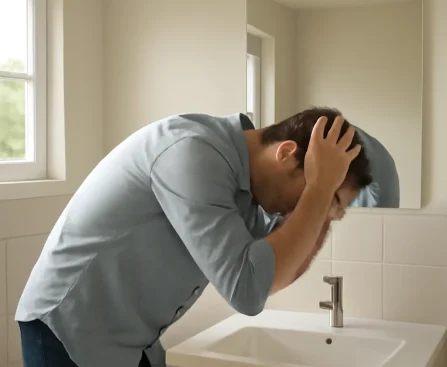
Hair gel is a styling product that holds hair in place using film-forming ingredients, and it can often be removed without shampoo by softening and rinsing it out with lukewarm water. The best approach depends on the gel’s hold and how much product is on the hair: wet thoroughly, gently loosen the residue with your […]
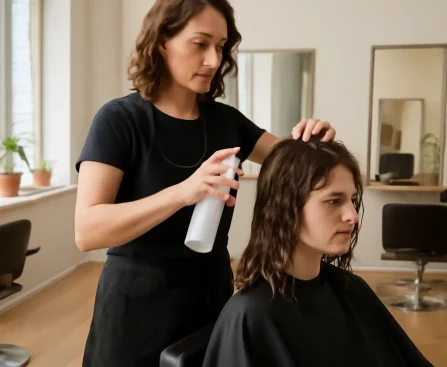
Shoulder-length hair sits in a versatile middle ground: long enough for defined waves and updos, yet short enough that heavy styling products can quickly weigh it down. The most reliable gel techniques are to apply gel to evenly damp hair, use a small amount and build gradually, choose the right application method for the style, […]
A sudden drop in humidity can make hair harder to style and keep in place. Hair texture control is the practice of managing how strands feel, look, and behave—especially their dryness, static, frizz, and shape. When the air gets drier, hair loses moisture more readily and can become brittle or flyaway; practical fixes include adjusting […]
Shoulder-length hair is long enough to move, bend, and frame the face, but short enough for the direction of a part, wave, or flipped end to change the whole silhouette. Directional styling means intentionally guiding hair toward or away from the face, or steering its volume and ends to a chosen side. At this length, […]
Hair strand thickness, coverage count, and texture shape are related but distinct characteristics of hair. Strand thickness describes the diameter of an individual hair; coverage count describes how many hairs occupy a given area of scalp; and texture shape describes whether strands are straight, wavy, curly, or coily. Keeping these measures separate matters in dermatology, […]
Wavy hair can lose definition or fall flat when products are too heavy, applied in the wrong order, or disturbed before they dry. Hairstylists’ practical answer is to layer a light leave-in or curl cream under a hold product—usually gel or mousse—on evenly damp hair, then let the waves dry with minimal handling. The right […]
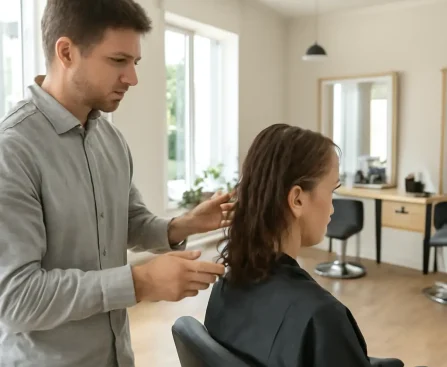
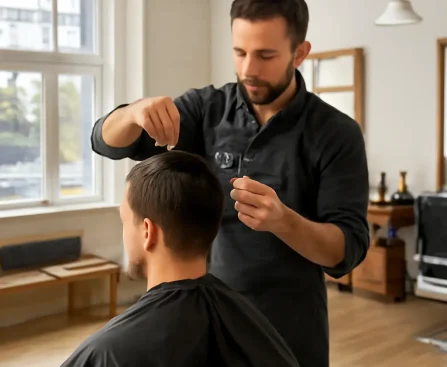
A barber’s hair division is the way the hair is separated into workable sections before styling product is applied. For gel styling, barbers typically part damp or dry hair according to the intended finish, create clean sections with a comb or fingers, and apply gel in controlled amounts—often working from the back or lower layers […]
Hair gel flaking is the visible shedding of dried styling product from the hair, often caused by product buildup, incompatible ingredients, excessive application, or disturbing a cast before it has fully dried. To reduce flakes, use less gel on clean, evenly damp hair, avoid layering it over incompatible products, and let it dry completely before […]
Smooth, polished hair without a greasy finish comes from controlling where product goes, using heat and tension strategically, and matching formulas to hair type. In salon practice, stylists typically apply lightweight products sparingly—often concentrating conditioner and oils on the mid-lengths and ends—then dry hair fully before adding a small amount of finishing product. That approach […]