
Music helps define expressive hair culture by giving people and communities a soundtrack for styles that communicate identity, belonging, resistance, and creativity. Here, expressive hair culture means the practices and meanings through which people shape, adorn, and present their hair; music influences it through artists’ visual styles, performance, lyrics, scenes, and media. From punk’s vivid color and defiant cuts to hip-hop’s braids and barber-shop artistry, musical subcultures make hair visible as a form of self-expression. That influence matters beyond fashion: the U.S. Crown Act Coalition has documented how hair discrimination affects Black people in schools and workplaces, while cultural histories show that Black hairstyles can carry meanings rooted in heritage and community. This article examines music’s role in shaping hair identity, style, politics, and commercial trends, while distinguishing cultural inspiration from appropriation.
Music Defines Expressive Hair Culture Through Identity and Performance
Expressive hair culture is the use of hair styling, grooming, coloring, and adornment to communicate personal or collective meaning. Music does not create every hairstyle associated with a scene, but it amplifies styles by placing them on performers, album covers, stages, screens, and in the everyday lives of fans. Sociologist Dick Hebdige, in Subculture: The Meaning of Style, describes subcultural style as a way marginalized groups make meaning through visible signs. Hair is one such sign: it can mark affiliation, challenge conventional standards, or connect a wearer to a cultural history.
The relationship is reciprocal. Musicians adopt and reinterpret styles from communities around them; audiences adapt those looks to local tastes, resources, and identities; and the resulting styles can return to popular culture through entertainment and fashion industries. Music’s influence is therefore best understood as a cultural conversation, not a simple chain in which an artist invents a look and everyone copies it.
Hair as a visible marker of identity
A hairstyle can signal gender expression, regional identity, cultural affiliation, or individual taste. In music scenes, shared looks help fans recognize one another and distinguish a group from mainstream expectations. Yet the same style may mean different things to different wearers: a shaved head might express punk solidarity, a practical choice, or a personal aesthetic rather than one fixed message.
The visibility of hair also makes it a site of social judgment. The Crown Act Coalition’s national research has reported that Black women face discrimination linked to natural and protective hairstyles, including braids, locs, and twists. The legal response has been significant: California enacted the first state CROWN Act in 2019, and the U.S. House of Representatives passed a federal CROWN Act bill in 2022, though it did not become federal law. These developments show why hair in music culture is not merely decorative: styles can intersect with questions of dignity, access, and whose appearance is treated as professional or acceptable.
Performance, image, and repetition
Music performance turns hair into part of a complete visual language. Stage lighting, choreography, costumes, and camera framing make a hairstyle legible at a distance and memorable across repeated appearances. Music videos and photographs extend that visibility, allowing a look to circulate well beyond a concert or local scene. Artists such as David Bowie, Grace Jones, Missy Elliott, and Lady Gaga have used changing hair and headwear as elements of persona and performance, demonstrating that hair can be theatrical, conceptual, and deliberately transformative.
This visibility can inspire experimentation, but it can also flatten context. A style seen as bold or avant-garde on a celebrity may be judged differently when worn by someone from a community historically associated with it. That contrast connects the aesthetics of performance to broader questions of cultural ownership and social power.
Music Shapes Expressive Hair Culture Across Genres and Scenes
Different genres develop distinct visual vocabularies, although their boundaries are porous and their styles change over time. Genre-linked hair is not a uniform code: artists and audiences borrow across scenes, and individuals often combine influences. The following examples illustrate recurring associations rather than rules about how any fan or musician must look.
Hip-hop, Black hair, and cultural memory
Hip-hop has provided a prominent platform for Black hairstyling, including fades, sculpted cuts, braids, cornrows, locs, and intricate barbering. These practices have histories beyond the music industry, with roots in Black communities and African diasporic traditions. Hip-hop artists and barbers have helped make skilled hair design a celebrated art form, while lyrics, music videos, and public appearances have connected particular looks to self-definition, status, regional style, and cultural pride.
The Smithsonian National Museum of African American History and Culture discusses hair as an important dimension of African American identity and history. That context matters when popular culture turns a protective or culturally significant style into a trend. The issue is not that styles must remain unchanged or exclusive; rather, understanding their origins and the unequal treatment attached to them helps distinguish respectful exchange from taking credit while ignoring the people who sustain the tradition.
Punk, metal, and alternative defiance
Punk and related alternative scenes have used hair to challenge polished, conventional appearance. Mohawks, shaved sections, spikes, bright dyes, and deliberately untidy cuts can communicate refusal of mainstream norms. Hebdige’s analysis of punk style helps explain why such choices carried meaning: subcultural clothing and appearance could make dissent visible, even when the wider market later repackaged those signs as fashion.
Heavy metal and hard rock have developed their own recognizable looks, including long hair that moves with performance and signals affiliation with a scene. These associations are historically variable rather than universal. The same long-haired look can signify genre loyalty in one setting and simply personal preference in another, illustrating how musical meaning depends on context and audience interpretation.
Pop, electronic music, and deliberate reinvention
Pop and electronic performers often use hair as a changeable design element: vivid color, sculptural shapes, wigs, close crops, or dramatic extensions can distinguish an album era or stage persona. Because these genres frequently circulate through highly visual media, a hair transformation can become part of an artist’s recognizable brand. It can also invite fans to experiment with identity through temporary color, styling, or accessories.
Digital platforms accelerate this exchange. A look can move from performance footage to tutorials, fan edits, salon references, and product campaigns within hours. This speed expands access to styling ideas, but it can obscure the original artist, stylist, or cultural community behind a trend. Crediting creative labor and researching a style’s history are practical ways to keep inspiration connected to context.
Music Turns Expressive Hair Culture into Social Commentary
Because hair is visible and socially regulated, music-linked hairstyles can communicate more than taste. They can contest narrow beauty standards, affirm identities, and draw attention to discrimination. The political meaning is not automatic: it emerges through a style’s history, the circumstances in which it is worn, and the reactions it receives.
Resistance to narrow beauty standards
Musicians who wear natural textures or culturally significant styles in highly visible roles can challenge the assumption that only straightened, subdued, or Eurocentric hair is professional or beautiful. This representation can be meaningful to audiences who rarely see their own hair celebrated in mainstream media. It also gives artists a way to make an aesthetic statement without reducing that statement to a lyric or slogan.
Research and advocacy reports on hair discrimination describe practical consequences in employment and education, particularly for Black people. The CROWN Act movement has helped bring those experiences into public discussion and has supported state-level protections. A hairstyle’s appearance in popular music does not itself end discrimination, but visibility can challenge assumptions and create opportunities for wider conversation.
Appropriation, attribution, and cultural exchange
Cultural appropriation debates arise when a style associated with a marginalized community is adopted by people or industries with greater social power, especially when the originators have faced stigma while others receive praise or profit for a similar look. Cultural exchange, by contrast, can involve mutual influence, acknowledgment, and respect. The distinction depends on context, history, power, and whether creators and communities are credited or benefit.
Music offers a clear setting for examining this tension. A hairstyle may be presented as edgy on a performer while people whose communities developed or maintained it encounter workplace restrictions. The most constructive response is not to treat every cross-cultural style as forbidden, but to ask informed questions: Where did the style come from? What meanings does it hold? Who is being celebrated, and who is being penalized? Are the artists, stylists, and communities receiving recognition?
Music and Expressive Hair Culture Create Real-World Trends
The movement from scene to mainstream typically involves artists, stylists, fans, media, and businesses. A performer’s look may inspire requests at salons and barbershops, while social media makes reference images and instructions easy to share. The process can create opportunities for skilled hair professionals, but it can also turn cultural practices into short-lived consumer trends without preserving their stories.
Artists and stylists as creative collaborators
A musician’s visual identity is often a collaboration among the artist, hairstylist, barber, makeup artist, photographer, and creative director. Hair professionals contribute technical expertise and design decisions that help make a look durable under stage lights, movement, travel, and repeated filming. Giving these collaborators visible credit recognizes hair styling as skilled creative work rather than an incidental finishing touch.
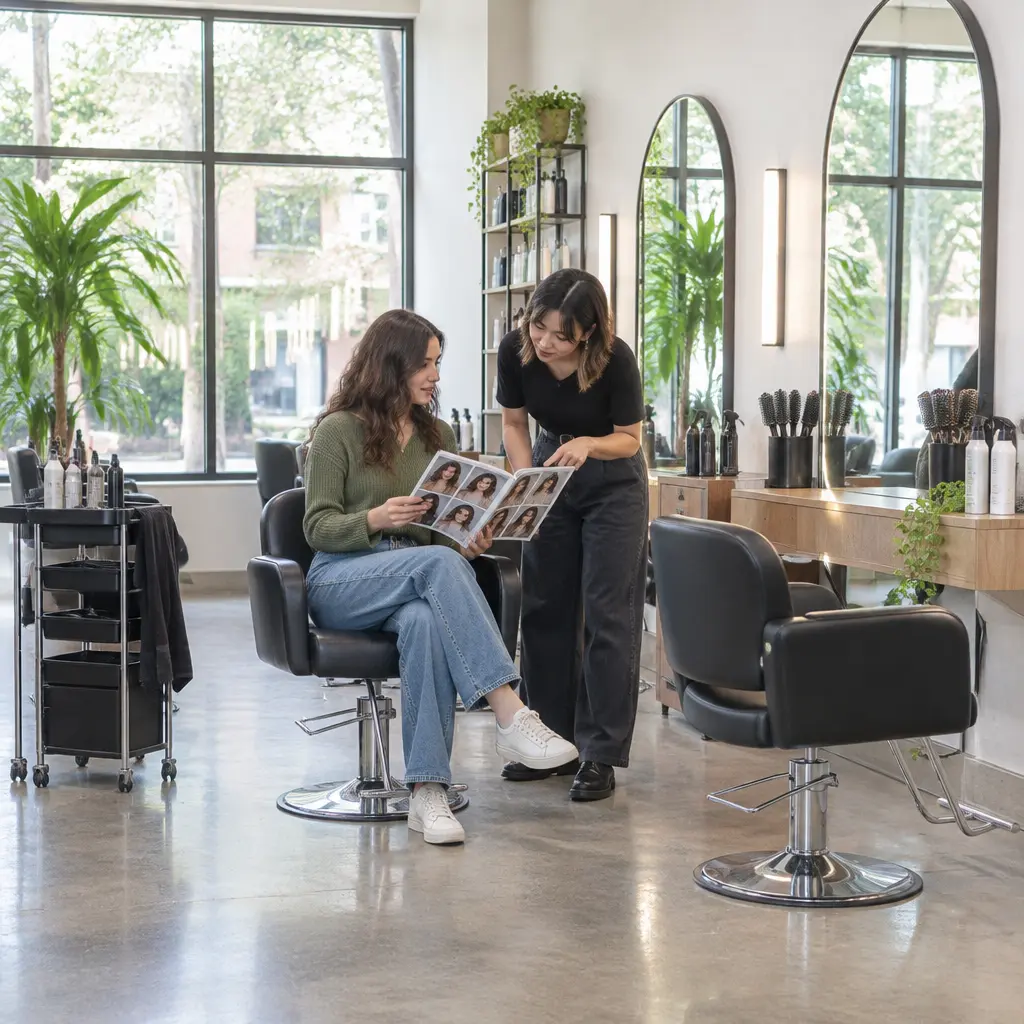
For audiences, salon and barbershop conversations can also translate an image into a style suited to a person’s hair texture, budget, maintenance needs, and preferences. This adaptation is important: copying a celebrity image exactly may be unrealistic or damaging, whereas informed consultation can preserve the inspiration while prioritizing hair health and individual choice.
A practical framework for responsible inspiration
Fans, journalists, stylists, and brands can engage with music-inspired hair thoughtfully by learning a style’s history, naming its sources, and avoiding claims that a community’s established practice is newly invented. They can also listen to people who experience discrimination related to that style and support protections for natural and protective hairstyles. These steps preserve creativity while taking cultural context seriously.
- Identify the artist, stylist, or community associated with the look and credit their creative contribution.
- Research the style’s cultural and historical context before presenting it as a new trend.
- Consult a qualified hair professional about safe techniques, maintenance, and suitability for the wearer’s hair.
- Support policies and workplace practices that protect people from discrimination based on natural and protective hairstyles.
A useful visual for further study would be a timeline chart tracing selected genre-linked hairstyles alongside major recordings, performances, and media technologies. Such a chart should label examples as influential moments, not as the origins of styles that may have much older histories.
Conclusion: Music Keeps Expressive Hair Culture in Motion
Music defines expressive hair culture by making hairstyles visible as signs of identity, performance, community, and resistance. Genre scenes—from hip-hop and punk to pop and electronic music—offer distinct but overlapping vocabularies, while artists, stylists, and fans continually reinterpret them. Hair’s public visibility also connects style to discrimination, cultural memory, and debates about attribution and appropriation.
Understanding these connections makes it possible to appreciate music-inspired hair without reducing it to a passing trend. Readers can explore museum collections and scholarship on hair history, learn from stylists and communities whose work shapes the culture, and support inclusive policies in schools and workplaces. In doing so, they help ensure that expressive hair remains a space for creativity and self-definition rather than a basis for exclusion.
Sources: Dick Hebdige, Subculture: The Meaning of Style, Routledge, 1979, https://www.routledge.com/Subculture-The-Meaning-of-Style/Hebdige/p/book/9780415039499; Crown Act Coalition, Research and Resources, https://www.thecrownact.com/research; Smithsonian National Museum of African American History and Culture, Hair and Identity, https://nmaahc.si.edu/explore/stories/why-we-wear-our-hair-way-we-do; California Legislative Information, Senate Bill No. 188, 2019, https://leginfo.legislature.ca.gov/faces/billTextClient.xhtml?bill_id=201920200SB188; U.S. Congress, H.R. 2116—Creating a Respectful and Open World for Natural Hair Act of 2022, https://www.congress.gov/bill/117th-congress/house-bill/2116