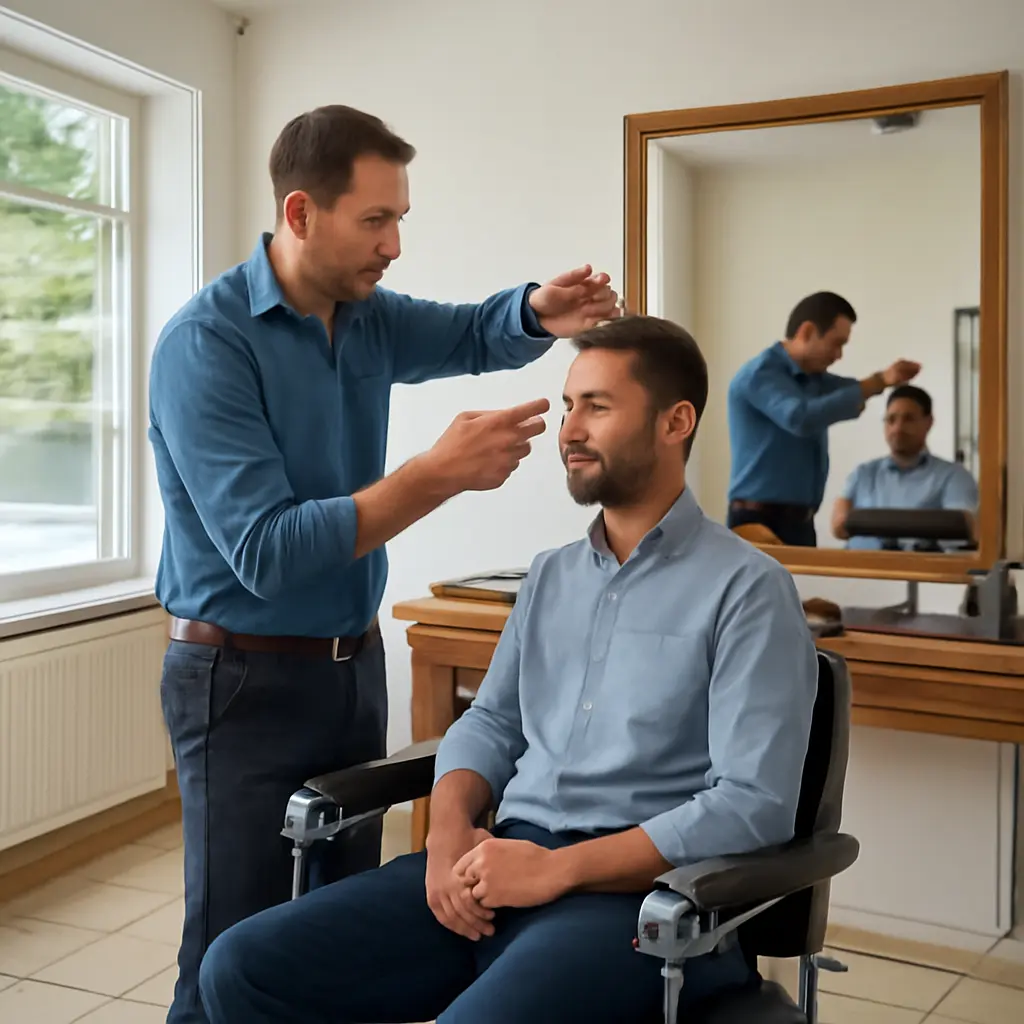

Maximum-hold styling is the use of strong-control products and techniques to keep hair in place, but “more hold” does not automatically mean a better result. Experienced barbers can still undermine a style by choosing a product that does not match the hair, applying too much, ignoring the scalp and hair’s condition, or setting an unrealistic expectation for all-day control. The American Academy of Dermatology (AAD) notes that styling practices can contribute to hair damage, while product labels and professional guidance emphasize using products as directed. The practical takeaway: assess the hair first, select hold and finish deliberately, apply in controlled amounts, and check the style in real-world conditions.
Maximum-hold styling mistakes and the meaning of hold
“Hold” is a product’s ability to help hair retain a chosen shape against movement, gravity, and environmental conditions. It is not a standardized strength rating across the grooming industry: one brand’s “strong” may not perform like another’s, and results depend on hair length, density, texture, product amount, and application method. The AAD’s guidance on hair care reinforces a key distinction: the condition and handling of hair matter alongside the cosmetic result.
Barbers generally encounter several forms of maximum hold: firm-hold pomades and pastes, gels, waxes, clays, sprays, and combinations such as a pre-styler followed by a finishing product. Each has different trade-offs in finish, flexibility, restyling, and removal. Maximum hold is useful for structured pompadours, slick-backs, spikes, and styles that need definition, but overusing it can create stiffness, visible residue, or a shape that looks disconnected from the client’s natural hair.
Mistake: treating hold labels as directly comparable
A hold label is a brand’s product claim, not a universal measurement. A barber who chooses solely by words such as “extreme,” “maximum,” or “cement” may overlook whether the product is water-based or oil-based, matte or shiny, pliable or rigid. Compare the ingredient list, directions, finish, and performance on similar hair rather than assuming the strongest-sounding label is best.
Mistake: confusing stiffness with reliable control
A rigid finish may appear secure in the chair but can become brittle, flaky, or uncomfortable as the hair moves. Flexible control can be more dependable for clients who touch or restyle their hair during the day. The correct target is the least restrictive product that holds the intended shape—not maximum stiffness for its own sake.
Hair assessment prevents maximum-hold product mismatches
A useful consultation considers hair texture, strand thickness, density, length, growth pattern, scalp condition, and the client’s daily routine. These characteristics affect how much product is needed and how a style responds to humidity, movement, and washing. The AAD advises people to handle hair gently and choose care practices suited to their hair type; the same principle applies to styling decisions.
Mistake: using the same product on fine and dense hair
Fine hair can be weighed down by a heavy wax or pomade, making the style look flat even when the product has strong hold. Dense or coarse hair may need section-by-section application and a product with enough grip to control bulk. A barber should test a small amount, assess the result, and build gradually instead of applying a full dose based on habit.
Mistake: ignoring curl pattern and natural growth
Curly, coily, and wavy hair may respond differently from straight hair to brushing, tension, and product distribution. Forcing every strand into a uniform shape can create frizz or disrupt the pattern. Cowlicks and strong growth directions also affect control: work with the hair’s natural movement where possible, and use sectioning or blow-drying to guide it before applying a finishing product.
Mistake: overlooking scalp sensitivity and product buildup
A product that holds well but irritates the client’s scalp is not a successful choice. Ask about sensitivity, prior reactions, and washing habits, and follow the product’s directions. The AAD recommends stopping use of a product that causes a reaction and consulting a dermatologist when irritation persists. Barbers should not diagnose scalp conditions; they should avoid applying product to visibly irritated or broken skin and advise the client to seek appropriate medical care.
Application errors that weaken maximum hold
Even a well-matched product can fail when applied incorrectly. Distribution, amount, hair dampness, and styling sequence all influence the finish. In practice, strong control is usually built through preparation and even coverage rather than a large lump of product placed on the surface.
Mistake: applying too much product at once
Overapplication can leave hair greasy, heavy, clumped, or visibly coated, and it may make later correction harder. Start with a small amount, warm it between the hands if the manufacturer recommends doing so, distribute it through the intended sections, and add more only where needed. This “buildable application” is especially useful when working with dense hair or a high-shine finish.
Mistake: uneven distribution and surface coating
Rubbing product only over the top can create a shiny shell while leaving the roots or interior sections uncontrolled. Conversely, putting too much product at the roots can collapse volume. Use fingers, a comb, or sectioning to spread product according to the style, then inspect from several angles for patches, clumps, and product lines.
Mistake: ignoring whether the hair should be damp or dry
Different formulas are designed for different application conditions. Applying a dry-hair product to soaking-wet hair can dilute or redistribute it; using a water-based product on very dry hair may make even coverage difficult. Read the label, follow the stated directions, and use blow-drying or other preparation only when it suits the client’s hair and the product system.
Mistake: skipping heat and tension safeguards
Blow-drying can create shape and lift before a hold product is applied, but excessive heat or aggressive brushing can stress hair. The AAD recommends limiting damaging styling practices and using care when applying heat. Keep the dryer moving, use a suitable heat setting, avoid unnecessary tension, and do not treat a strong finishing product as a substitute for careful technique.
Finish, environment, and client expectations
Maximum hold is a styling outcome, not a promise that hair will remain untouched in every condition. Humidity, wind, perspiration, hats, helmets, and frequent hand contact can alter a style. Clear consultation and a realistic finishing check help clients understand what the product can—and cannot—do.
Mistake: overlooking finish and flexibility
A matte clay, glossy pomade, and hard-setting gel may all provide substantial control but produce very different looks and feel. Ask whether the client wants movement, separation, shine, or a crisp fixed shape. For example, a matte textured style may call for a pliable product, while a sharply defined slick-back may justify a firmer finish. Match the product to the requested appearance, not just the desired hold level.
Mistake: promising all-day perfection without considering conditions
A style that holds in a calm shop may behave differently outdoors or during physical work. Ask about the client’s routine and demonstrate how to refresh the look with fingers, a comb, or a small amount of product if appropriate. If a style repeatedly fails in the client’s normal conditions, adjust the cut, preparation, product, or expectation rather than simply adding more hold.
Mistake: failing to teach removal and aftercare
Some strong-hold formulas require more deliberate cleansing than lightweight styling products. Explain how to follow the label’s removal directions and avoid harsh scrubbing that can irritate the scalp or roughen hair. The client should also know that persistent itching, redness, or swelling warrants discontinuing the suspected product and seeking professional medical advice.
A practical barber checklist for dependable hold
A short, repeatable process reduces avoidable styling errors and makes results easier to reproduce. It also helps distinguish a product problem from a haircut, preparation, or expectation problem.
- Ask about the desired shape, finish, daily routine, and any product sensitivities.
- Assess texture, density, length, growth pattern, and scalp condition before selecting a formula.
- Prepare the hair gently and follow the product’s directions for damp or dry application.
- Apply a small amount evenly, building control in stages rather than overloading the hair.
- Check the result from multiple angles and test how it moves, feels, and responds to a light restyle.
- Explain realistic wear, removal, and aftercare; adjust the plan if the client’s environment changes the result.
For a visual guide, a barber shop could display a simple comparison chart showing product type, typical finish, flexibility, and removal considerations. Such a chart should be labeled as a practical comparison—not a universal hold ranking—because formulations vary by brand.
Conclusion: maximum hold works best when it is precise
The most common maximum-hold styling mistakes are choosing by label alone, ignoring hair and scalp differences, applying too much or unevenly, using the wrong dampness or preparation, and promising control without accounting for real-world conditions. Strong results come from matching the product to the client, building hold gradually, protecting hair during styling, and explaining upkeep. Barbers can refine their approach by reviewing product directions, tracking which formulas work on different hair types, and asking clients how the style performs after they leave the chair.
Sources: American Academy of Dermatology Association, Hair styling without damage, https://www.aad.org/public/everyday-care/hair-scalp-care/hair/hair-styling-without-damage; American Academy of Dermatology Association, 6 tips for healthy hair, https://www.aad.org/public/everyday-care/hair-scalp-care/hair/healthy-hair-tips; American Academy of Dermatology Association, How to test skin care products, https://www.aad.org/public/everyday-care/skin-care-secrets/routine/test-skin-care-products.