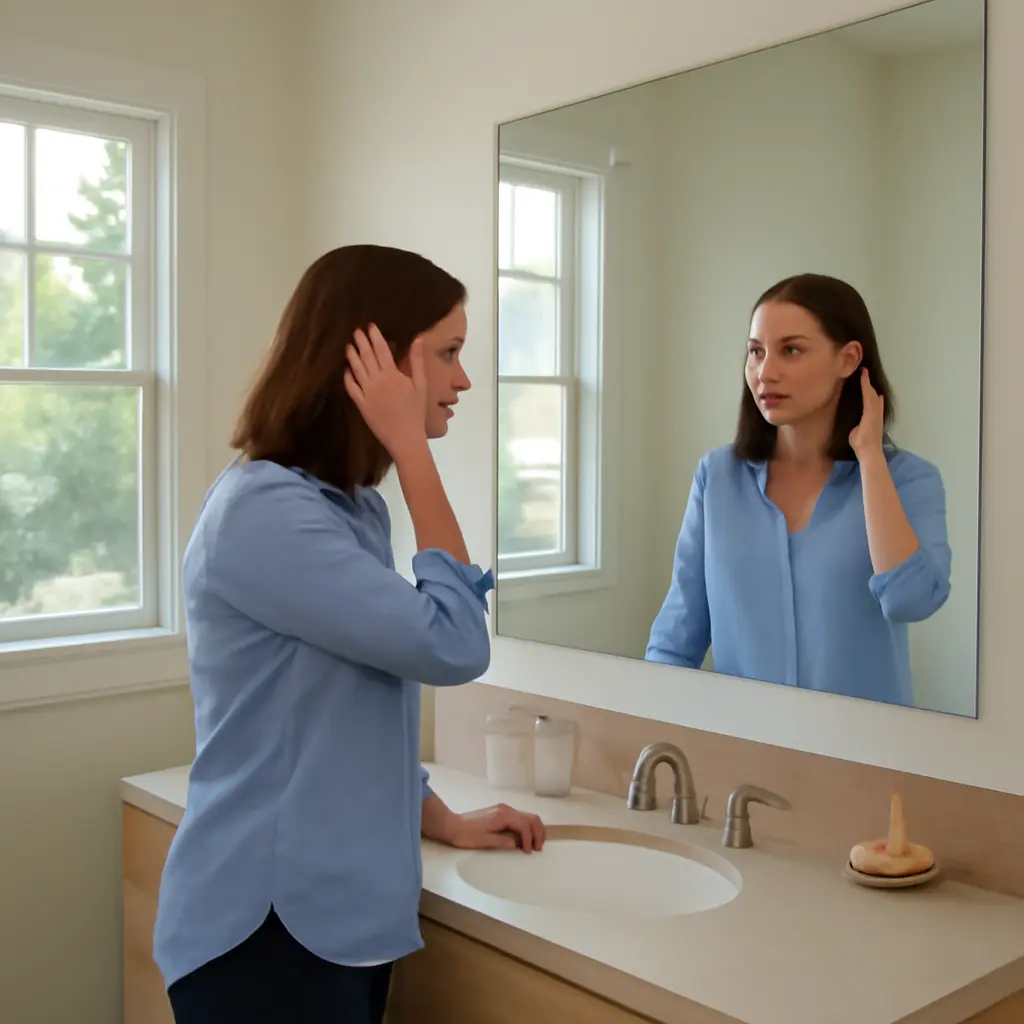

Shoulder-length hair is long enough to move, bend, and frame the face, but short enough for the direction of a part, wave, or flipped end to change the whole silhouette. Directional styling means intentionally guiding hair toward or away from the face, or steering its volume and ends to a chosen side. At this length, small adjustments can shift the look from polished to relaxed without changing the cut. The practical difference matters: the American Academy of Dermatology advises limiting heat exposure and using the lowest effective temperature, so learning a few controlled, low-effort directions can help create variety without relying on repeated, high-heat styling.
Directional Styling and Shoulder-Length Hair: Why the Pairing Matters
Directional styling is the deliberate placement of hair so its roots, lengths, and ends travel in a chosen direction. For hair that reaches the shoulders, this approach works especially well because the tips interact with the neck and collarbones: they can turn inward, kick outward, or sweep across the shoulders. The resulting shape depends on more than the haircut. Part placement, natural growth patterns, texture, and styling technique all influence where the hair sits.
The term is a practical styling description, not a formal medical or cosmetology classification. Its key characteristics are direction, tension, and finish: where the hair is guided, how firmly it is shaped, and whether the surface looks smooth, separated, or softly textured. Common forms include a side sweep, face-framing movement, inward bend, outward flip, and directional waves.
The American Academy of Dermatology (AAD) emphasizes that heat can damage hair and recommends using the lowest effective temperature, limiting heat-styling frequency, and letting hair air-dry when possible. That guidance makes directional styling useful as a technique rather than a mandate to use hot tools: fingers, a brush, rollers, or a brief, careful blow-dry can all help establish movement.
Part Direction and Root Lift
Part direction determines how hair is distributed at the scalp. A center part creates a relatively balanced frame, while a side part places more hair on one side and can produce a pronounced sweep. To encourage lift, redirect the roots briefly against their usual fall, then let the hair settle into the intended part. This is a styling effect, not a guaranteed way to change natural density or growth.
At shoulder length, changing the part can also alter how the front layers meet the cheek and jaw. For a quick test, move the part a little at a time rather than making a dramatic shift; the best placement is the one that sits comfortably with the hair’s natural growth and does not require constant pulling.
Face-Framing Sweeps
A face-framing sweep directs the front sections away from or toward the face. Sweeping hair away opens the face and connects the front pieces to the rest of the style; directing them inward creates a softer frame. The AAD notes that repeated tension from tight hairstyles can contribute to traction alopecia, so keep clips and ties comfortable and avoid styling that pulls persistently at the hairline.
Directional Styling Changes the Shoulder-Length Silhouette
Once the part and front pieces are set, the ends determine how the haircut occupies space. Because shoulder-length tips rest near clothing and the neck, even a modest bend can make the outline appear sharper, softer, or more casual. The direction should suit both the cut and the day’s practical conditions—especially collars, scarves, and humidity.
Inward Bends for a Compact Outline
An inward bend turns the ends toward the neck. It gives blunt or softly layered hair a contained finish and can make the outline look neat under a jacket or shirt collar. Use a round brush or a low-heat tool only as needed, directing the final few inches inward; avoid clamping the same section repeatedly.
Outward Flips for Movement
An outward flip turns the tips away from the neck, creating a more energetic edge. On layered hair, different lengths can produce a deliberately piecey effect; on a one-length cut, the flip reads more graphic. A small amount of lightweight styling product can help separate the ends, but heavy product may weigh down fine hair.
Directional Waves for Texture
Directional waves alternate or repeat bends so the hair appears to move in a chosen pattern. Waves that travel away from the face can open the front, while a relaxed, mixed pattern often looks less uniform. For a lower-heat option, braid or twist slightly damp hair and allow it to dry fully before releasing it. Results vary with hair texture, length, and moisture, so treat this as a flexible method rather than a guaranteed curl pattern.
Directional Styling by Hair Texture and Cut
The same direction does not behave identically on every head of hair. Density, strand thickness, curl pattern, layering, and natural growth all affect how long a shape lasts. The most reliable approach is to use the least force needed and adapt the technique to the hair’s own movement.
Fine or Straight Hair
Fine or straight hair can show directional changes clearly, but may lose lift under heavy products. Work with small sections, keep styling products light, and focus on setting the roots or ends rather than coating the full length. A subtle part shift or a gentle bend at the tips may provide enough contrast.
Wavy, Curly, or Coily Hair
Wavy, curly, and coily hair may have an established pattern that responds better to shaping than to brushing into a new direction. Apply suitable leave-in or styling product, then guide sections with fingers while damp and allow them to dry with minimal disturbance. The AAD recommends handling textured hair gently and avoiding practices that cause excessive pulling or breakage; a stylist familiar with the person’s texture can tailor the method and cut.
Layered and One-Length Cuts
Layers make directional changes more visible because shorter sections can lift or turn independently. A one-length cut tends to emphasize a clean perimeter, so the direction of the ends has a stronger effect on the overall outline. In either case, ask a stylist to consider how the hair naturally falls at shoulder level; a cut that works with its growth pattern usually needs less corrective styling.
A Heat-Conscious Routine for Changing Direction
A simple routine can create several looks while limiting unnecessary heat and tension. Begin with clean, detangled hair and choose one main directional change—part, face frame, or ends—rather than trying to reshape every section. If using a dryer or hot tool, follow the AAD’s advice to use the lowest effective setting and avoid repeated passes over the same area.
- Decide whether the goal is root lift, a face-framing sweep, inward ends, outward ends, or waves.
- Apply a suitable heat protectant when using hot tools, following the product label.
- Work in manageable sections and guide the hair in the intended direction with fingers or a brush.
- Allow the shape to cool or dry before loosening it; use a light finishing product only if needed.
- Change direction gently on another day rather than repeatedly forcing the same section into shape.
For a visual comparison, imagine a simple four-panel chart showing the same shoulder-length cut with a center part, side sweep, inward ends, and outward ends. The haircut stays constant; the changing directions demonstrate why styling can alter the perceived balance and energy of the silhouette.
Conclusion: Small Direction Changes, Noticeable Results
Directional styling makes shoulder-length hair adaptable by changing how the part, front sections, and ends sit around the face and shoulders. Side sweeps and root redirection influence the upper shape; inward bends, outward flips, and waves reshape the perimeter; texture and cut determine which methods feel natural. Because heat and persistent tension can harm hair, the most useful routine is the one that achieves the desired movement with gentle handling and minimal repetition. Try one change at a time, observe how your hair responds, and consult a stylist for advice suited to your texture and haircut.
Sources: American Academy of Dermatology Association, Hair styling without damage, https://www.aad.org/public/everyday-care/hair-scalp-care/hair/hair-styling-without-damage; American Academy of Dermatology Association, Hairstyles that pull can lead to hair loss, https://www.aad.org/public/diseases/hair-loss/causes/hairstyles