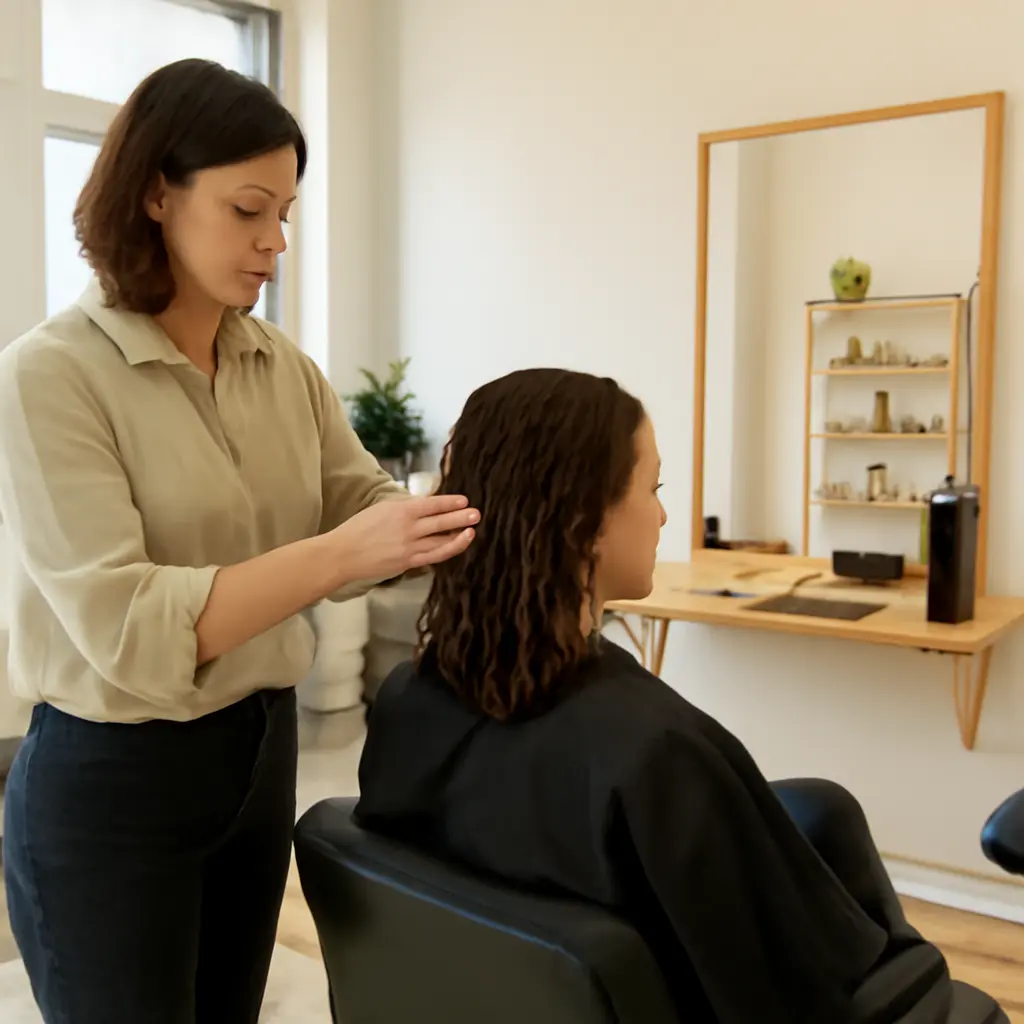

Palm distribution—the way people apply and spread styling products with their hands—is reshaping everyday hair routines by making technique, product choice, and hair texture part of the same conversation. Rather than simply rubbing gel, cream, or oil between the palms and smoothing it over the hair, stylists and consumers increasingly use deliberate hand movements such as glazing, praying hands, raking, and scrunching. These techniques can help distribute product more evenly, support curl definition, and reduce unwanted friction, although results depend on the product, hair type, and method. The shift reflects a broader move toward personalized styling: the U.S. Bureau of Labor Statistics counted about 651,000 barbers, hairstylists, and cosmetologists in 2023, while social platforms have made practical demonstrations of styling methods easier to find and imitate.
Palm distribution and its role in modern hair styling
Palm distribution is the controlled transfer and spreading of a hair product from the hands onto the hair. In professional practice, the related idea is product application: the placement of a styling or conditioning product so that it reaches the intended sections without excessive buildup. There is no single standardized scientific definition of “palm distribution”; here, the term describes a family of hand-based application techniques used in salons and at home.
The technique matters because products do not perform independently of application. A styling cream can support softness and manageability, while a gel may provide hold; uneven application can leave some sections coated and others untreated. Palm distribution also makes styling more adaptable: a person can alter pressure, direction, and section size in response to curl pattern, density, length, or desired finish.
A useful distinction is between spreading product across the hands and distributing it through the hair. The first step helps reduce concentrated blobs; the second determines where the product lands. The American Academy of Dermatology advises people with curly or textured hair to use conditioner and detangle carefully, including while hair is wet and conditioned. That guidance reinforces a broader principle: handling technique should suit the hair’s condition and texture, not just the product label.
Why hand placement changes the result
Hand placement controls contact and tension. Flat palms can smooth product over the surface of a section, while separated fingers can guide product between strands. Scrunching uses an upward, compressing motion that encourages waves or curls to gather; raking uses fingers like a wide-tooth comb to distribute product through a section. These are practical styling approaches rather than medically proven treatments, so their effects should be understood as cosmetic and technique-dependent.
Why the approach is gaining visibility
Online video has made previously salon-based techniques easier to demonstrate, compare, and adapt. Short tutorials often show the amount of product, hand position, and sequence of motions in a way that a written label cannot. At the same time, social-media demonstrations are not controlled tests: lighting, hair preparation, product formulas, and editing can influence the apparent result. Viewers can treat them as ideas to test rather than universal instructions.
Palm distribution techniques and their applications
Palm distribution includes several related methods, or hyponyms, that describe particular hand motions. The best choice depends on whether the aim is smoothness, definition, volume, or a light finish. A simple starting point is to use a small amount, spread it across the hands, apply it to damp or dry hair as directed by the product, and add more only if needed.
Glazing and praying hands
Glazing means lightly smoothing product over the outside of a section or over the hair’s surface. The praying-hands method places a section between flat palms and slides downward with gentle pressure. These approaches are often used with gels, creams, or leave-in products when the goal is to smooth flyaways or coat curls without separating them aggressively. They can be useful for reducing rough handling, but pressing too firmly or repeatedly may flatten volume.
Raking and finger distribution
Raking involves passing fingers through a section to carry product from roots toward ends. It can help distribute a formula more deeply than surface smoothing, particularly when hair is dense or has multiple layers. The trade-off is that extensive finger separation may loosen curl clumps or create frizz for some people. A gentler alternative is to rake once, then smooth the section between the palms or scrunch it to restore its shape.
Scrunching for waves and curls
Scrunching means gathering the ends toward the scalp and compressing the hair in the palm. It is commonly used to encourage a wave or curl pattern while applying mousse, gel, or curl cream. The method is especially associated with styling damp, textured hair, but the result depends on natural pattern, product hold, drying method, and how much the hair is touched afterward. It is not a way to permanently change hair structure.
Emulsifying product between the palms
Emulsifying, in everyday styling, means rubbing a small quantity of product between the hands to spread it into a thinner, more workable layer before application. It can make a concentrated cream, pomade, or oil easier to place and may help prevent one section from receiving a large deposit. Products vary, however: some formulas are intended to be applied directly or used in specific amounts, so following the manufacturer’s directions remains important.
Palm distribution by hair type, product, and styling goal
Once the hand motions are understood, the next decision is how to adapt them. Hair texture, strand thickness, density, porosity, and the desired finish all affect how a product feels and spreads. The same technique can therefore produce different outcomes across individuals.
Straight and fine hair
Fine or straight hair may be weighed down by a heavy coating, especially near the roots. Applying a small amount to the palms and concentrating it on mid-lengths and ends can help avoid a greasy or flattened appearance. Lightweight mousse or spray may suit some styling goals better than a rich cream. If the hair looks coated, reduce the quantity or apply product to fewer sections rather than adding more.
Wavy, curly, and coily hair
Wavy, curly, and coily hair often benefits from section-by-section application because distribution can be difficult through dense or tightly patterned strands. A person may combine raking for coverage with glazing or scrunching for definition. The American Academy of Dermatology recommends gentle handling for curly hair and cautions against practices that create unnecessary pulling. This supports using controlled motions and detangling with suitable conditioning rather than forcing fingers through resistant knots.
Matching the method to the formula
Creams and leave-in conditioners are often spread with smoothing or sectioning motions; gels and mousses may be applied by glazing, raking, or scrunching, depending on the desired finish. Oils and serums are typically used sparingly, with attention to the ends and areas that need smoothing. These are general practices, not fixed rules: ingredient composition and product instructions differ, and using several layers can lead to buildup.
Evidence, limits, and practical considerations
Palm distribution is a practical styling framework, not a clinical intervention with a large body of comparative trials. Claims that one hand method universally prevents breakage, guarantees curl definition, or improves hair growth go beyond what styling demonstrations alone can establish. Cosmetic outcomes can be assessed by observing manageability, appearance, and how the style holds, but those results are individual and influenced by many variables.
A simple way to test a technique
For a fair comparison, keep the product and wash routine consistent, then change one element—such as using glazing instead of raking. Apply a modest amount, work in manageable sections, and note whether the hair feels coated, looks defined, or loses volume. A small test section can help avoid applying an unfamiliar formula across the entire head.
Hygiene and scalp comfort
Clean hands and clean styling tools help limit the transfer of dirt and product residue. Avoid forceful rubbing when the hair is tangled, and stop if a product causes irritation or discomfort. People with persistent scalp symptoms or concerns about hair loss should seek advice from a qualified health professional rather than relying on styling trends.
Conclusion: Palm distribution makes styling more intentional
Palm distribution describes how products are spread from the hands through or over the hair, while methods such as glazing, praying hands, raking, scrunching, and emulsifying provide different ways to control that process. The techniques are becoming more visible because they are easy to demonstrate and can be adapted to different textures and styling goals. Their value lies in thoughtful application, not in a promise that one method works for everyone.
Choose a technique based on your hair and product, begin with a small amount, and assess the result before changing several parts of your routine. For further guidance, consult a licensed stylist for texture-specific recommendations and the American Academy of Dermatology for evidence-informed hair-care advice.
Sources: U.S. Bureau of Labor Statistics, Occupational Outlook Handbook: Barbers, Hairstylists, and Cosmetologists, https://www.bls.gov/ooh/personal-care-and-service/barbers-hairstylists-and-cosmetologists.htm; American Academy of Dermatology Association, Hair care tips for people with textured hair, https://www.aad.org/public/everyday-care/hair-scalp-care/hair/healthy-hair-tips; American Academy of Dermatology Association, Hair loss: Tips for managing, https://www.aad.org/public/diseases/hair-loss/treatment/tips.