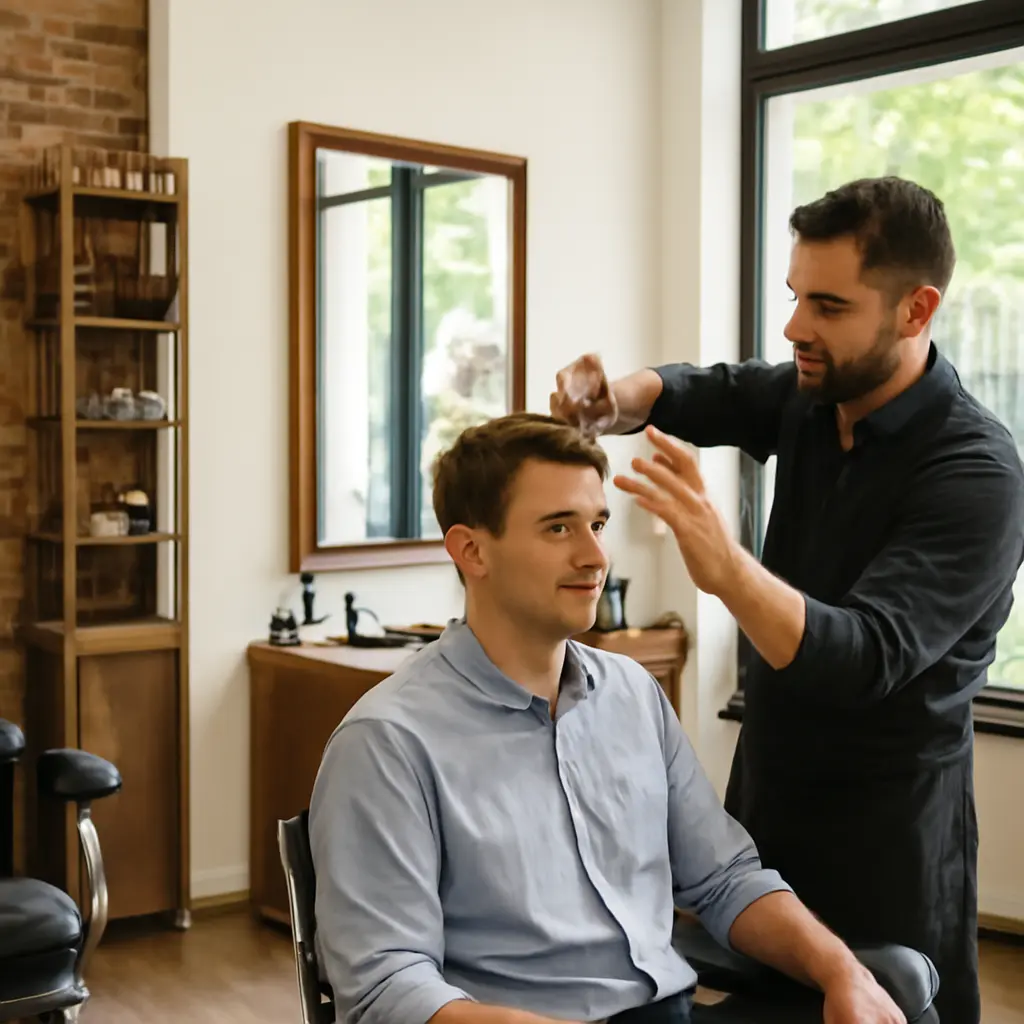

Spiky haircuts are styles that use short, textured, or deliberately lifted sections to create a pointed silhouette. The best version depends less on a rigid “face-shape rule” than on balancing the haircut’s height, width, and texture with your features, hair type, and styling habits. Five adaptable options—the classic textured crop, spiky quiff, faux hawk, short spiky fringe, and tapered spiky cut—can each be adjusted to suit oval, round, square, heart, and longer faces. Face-shape guidance is a useful starting point, not a scientific guarantee: there is no reliable universal statistic proving one haircut is ideal for every person with a given face shape.
How Spiky Cuts Balance Face Shape and Haircut Proportions
A spiky cut combines a shorter or graduated base with texture that stands away from the scalp. Barbers and stylists typically shape that texture through cutting, then use a styling product to define separation and hold. The American Academy of Dermatology describes hair as growing from follicles in the skin; its texture, density, growth pattern, and condition all affect how a finished style behaves. In practice, those characteristics matter alongside facial proportions: a cowlick, fine strands, or tight curls may influence the result as much as a face-shape label.
Face-shape advice commonly groups faces into oval, round, square, heart, and oblong or long categories. These are visual styling frameworks rather than formal medical classifications, and real faces often combine features from several categories. A useful consultation focuses on the effect you want: more height, less width at the temples, a softer jawline, or a balanced forehead-to-chin outline.
The five cuts below use those proportion goals in different ways. Before choosing one, tell your barber how much daily styling you will do, how short the sides can be, and whether you want fringe or an exposed hairline. A reference photo helps communicate the silhouette, but the cut should be adapted to your hair’s density and natural direction.
The Textured Crop Creates Compact, Controlled Spikes
A textured crop keeps the top relatively short and uses choppy layers or point-cut ends to create small, irregular spikes. The sides may be tapered or faded, while the front can be worn forward as a short fringe. Its compact shape makes it a practical choice for people who want visible texture without a tall, high-maintenance style.
Textured Crop for Round Faces
For a round face, a crop can add definition without building excessive height. Ask for close, neat sides and slightly more texture at the top, with spikes directed upward or diagonally rather than spread broadly across the head. A subtle forward fringe can also make the face appear less open at the forehead, though a heavy, blunt fringe may make the overall outline look shorter.
The goal is proportion, not a promise that a haircut will change facial structure. If your hair is thick, ask the barber to remove bulk selectively; if it is fine, avoid over-thinning, which can leave the ends too wispy to hold a defined texture.
Textured Crop for Oval Faces
Oval faces can generally accommodate a wide range of crop variations, so the decision can focus on hairline, texture, and upkeep. A short, piecey top works for a low-effort finish, while a longer top gives more freedom to sweep the spikes sideways or forward. Keep the fringe light if you want to retain the face’s natural length and balance.
The Spiky Quiff Adds Height Above the Forehead
A spiky quiff is a lifted front section styled upward and usually slightly backward, with the top left longer than the sides. Unlike uniformly spiked hair, the quiff concentrates its height near the hairline. That makes it a good option for someone who wants a sharper outline and a more prominent front without making every section stand straight up.
Spiky Quiff for Square Faces
A square face is often described as having a broad forehead and a defined jaw. A moderate quiff can add movement above those strong angles, while a low or mid taper keeps the sides tidy without making the head look overly narrow. Ask for separated, soft spikes rather than a rigid wall of hair if you want a less severe finish.
The height should suit your proportions and comfort. A very tall quiff lengthens the overall silhouette and may feel too dramatic for everyday wear; a lower, forward-leaning version gives a subtler lift.
Spiky Quiff for Heart-Shaped Faces
Heart-shaped faces are commonly associated with a broader forehead and a narrower chin. A moderate quiff can work when its width is controlled and the sides are not cut so tight that the forehead appears even broader. A slightly side-directed front, rather than a tall, centered peak, can soften the transition between forehead and lower face.
The Faux Hawk Directs Texture Along the Center
A faux hawk leaves a strip of longer hair through the center of the head and gradually shortens the sides, without shaving the sharp, exposed strip associated with a traditional mohawk. The center can be spiked from the front toward the crown or shaped into a low ridge. Because the side contrast is adjustable, this cut can range from office-friendly to bold.
Faux Hawk for Oval and Square Faces
On an oval face, the faux hawk’s central direction can add personality without requiring a major change to the face’s proportions. For a square face, a softer ridge and blended sides can introduce vertical movement while avoiding an overly boxy outline. Tell your barber whether you want a defined central crest or a more subtle, textured taper.
This style depends on the contrast between the center and sides, so the maintenance schedule matters. As the sides grow, the ridge becomes less distinct; a barber can recommend a trim interval based on how crisp you want the outline to remain.
Faux Hawk for Round Faces
A moderate faux hawk can create a longer visual line through the center, which some people with round faces prefer. Keep the crest narrow and the sides controlled rather than wide and fluffy. If you want a restrained look, ask for a gradual taper instead of an abrupt skin fade.
The Short Spiky Fringe Keeps Height Low
A short spiky fringe combines a forward-facing front with short, piecey texture. The spikes may point down and forward or angle slightly upward, but the style generally avoids the substantial height of a quiff. It can be useful for people who prefer a low-profile cut or want a fringe to frame the forehead.
Short Spiky Fringe for Long Faces
For a longer or oblong face, a short fringe can visually reduce the amount of exposed forehead, while restrained top height avoids adding extra vertical length. Ask for a textured edge rather than a heavy, perfectly straight line if you want a relaxed finish. Keep enough length at the front for the fringe to sit naturally instead of springing upward.
Short Spiky Fringe for Heart-Shaped Faces
A light fringe can help balance a wider upper face by bringing attention toward the eyes and center of the face. The key is keeping the front textured and not overly dense. If your hair grows in a strong forward cowlick, ask the barber to account for its direction; otherwise, the fringe may separate or lift in an unintended way.
The Tapered Spiky Cut Balances Length and Clean Edges
A tapered spiky cut gradually shortens the hair around the temples and neckline while leaving a textured top. It is less defined by one top shape than by its clean transition from the sides to the crown. The top can be cropped, quiffed, or styled into loose spikes, making the taper a flexible foundation for different face shapes.
Tapered Spiky Cut for Round and Oval Faces
For a round face, a neat taper with controlled top height can add definition without excessive width. For an oval face, the same foundation can support either a compact texture or a more pronounced lift. Ask for the sides to be tapered in a way that suits your hairline and head shape; an extremely tight fade is not necessary for a sharp finish.
Tapered Spiky Cut for Square and Long Faces
A square face can benefit from a textured top that softens the outline, while a longer face may look more balanced with lower top height and a little fullness at the sides. A stylist can adjust the taper’s starting point and the top’s length to create the preferred visual effect. These are adaptable design choices, not fixed rules: hair density, personal style, and workplace expectations also count.
Styling Spiky Cuts for Texture, Hold, and Hair Health
The right product depends on the finish you want. A matte clay or paste can create separated, natural-looking texture; gel often gives a shinier, more defined hold. Start with a small amount, warm it between your palms, and work it through dry or slightly damp hair according to the product directions. Add more only if needed, since excess product can weigh down fine hair or make the style look stiff.
For more lift, direct the hair with your fingers or a blow-dryer while shaping it. Use a moderate heat setting and avoid holding hot airflow in one spot. The American Academy of Dermatology advises gentle hair care and warns that excessive heat can damage hair; its guidance supports using heat tools sparingly and protecting hair from prolonged high temperatures.
A visual guide could compare the five silhouettes—crop, quiff, faux hawk, fringe, and taper—by top height, side width, and styling effort. That comparison is more useful than a face-shape chart alone because it shows the actual features a barber can adjust.
Conclusion: Choose Spikes by Proportion, Texture, and Routine
The textured crop offers compact definition; the spiky quiff concentrates lift at the front; the faux hawk creates a central ridge; the short spiky fringe keeps height low; and the tapered spiky cut provides a versatile, clean-edged foundation. Each can be adapted to different face shapes by changing top height, fringe length, side width, and taper—not by following a one-size-fits-all rule.
Use face shape as a conversation starter, then consider your natural growth pattern, hair type, styling time, and preferred level of contrast. Bring a reference image to your next appointment and ask your barber which details should be adjusted for your features. For more personalized advice, consult a licensed barber or stylist who can assess your hair in person.
Sources: American Academy of Dermatology Association, Hair care: 12 ways to help your hair, https://www.aad.org/public/everyday-care/hair-scalp-care/hair/healthy-hair-tips; American Academy of Dermatology Association, Hair loss: Tips for managing, https://www.aad.org/public/diseases/hair-loss/treatment/tips; Encyclopaedia Britannica, Hair, https://www.britannica.com/science/hair-anatomy.