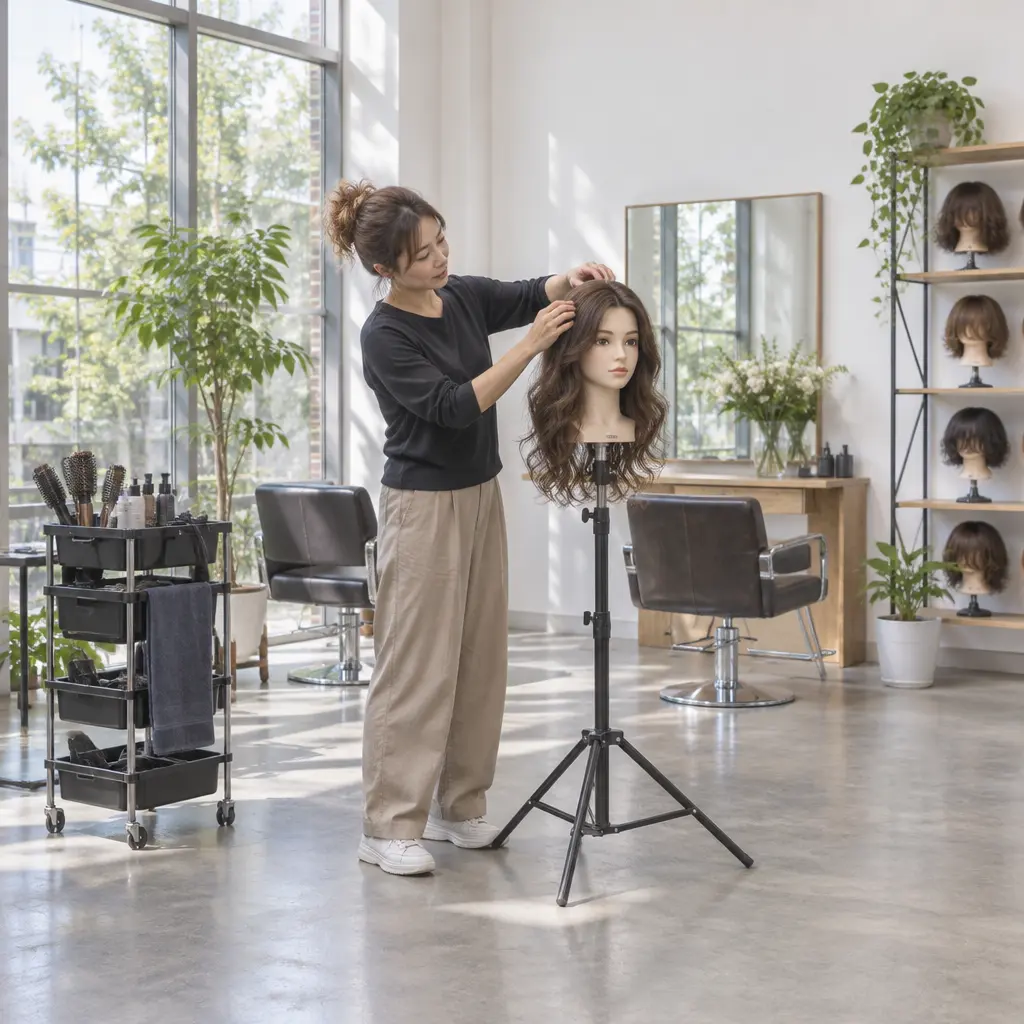

A natural-looking wig is one that suits its wearer’s hairline, face, and personal style while sitting securely and blending convincingly with the scalp and surrounding hair. Achieving that effect usually involves choosing the right part and hairline, adjusting the cap, shaping the cut, and styling with products and heat appropriate to the wig’s fiber. The American Academy of Dermatology recommends gentle care for wigs and hairpieces, particularly when they are worn to manage hair loss; careful styling can help preserve the wig as well as improve its appearance. The following guide explains how to create a believable hairline, add realistic shape and movement, and maintain the result safely.
Wig styling techniques create a natural-looking finish
Wig styling is the process of arranging, shaping, and finishing a wig so it complements the wearer and looks like hair growing naturally. Wig professionals and manufacturers commonly distinguish between human-hair wigs and synthetic wigs because their fibers respond differently to heat, washing, and styling products. A convincing result is not just about curls or volume: the cap fit, part placement, hairline, density, and color all contribute to how natural the wig appears.
There is no reliable universal statistic for how many people can identify a well-styled wig, since results depend on the wig, wearer, setting, and observer. Practical indicators are more useful: the wig fits without visible gaps, the hairline does not look overly uniform, and the style moves in a way that suits the fiber. Styling should also protect the wearer’s scalp and the wig’s construction, especially if the piece is worn often.
Start with cap fit and placement
A wig cap is the base that holds the hair fibers and sits against the head. Before styling, secure the wearer’s natural hair flat under a wig cap, then place the wig according to its design and adjust the straps or fastening features. The cap should feel secure but not painfully tight. If the wig shifts, a carefully fitted wig grip or manufacturer-approved adhesive may help; follow product directions and avoid applying adhesive to irritated or broken skin.
Check the front, temples, and nape in a mirror. A cap that sits too far forward can make the hairline look unnatural, while one placed too far back may expose the cap or create an implausible forehead. If the fit is persistently uncomfortable or the wig does not align with the wearer’s head, seek help from a wig fitter rather than forcing the cap into place.
Choose a part that suits the wig
A part is the visible division between sections of hair. Lace-front and monofilament wigs often allow more realistic-looking parting than basic machine-made caps, but the part should still follow the wig’s construction. Use a tail comb to define a clean part without tugging at the knots or base. A slightly irregular, natural-looking part can appear less artificial than a perfectly sharp line, but avoid disturbing the fiber roots or exposing the cap.
For a lace-front wig, trim lace only if the manufacturer’s instructions allow it and use small, careful cuts. Cutting too close to the hairline can damage the lace or remove fibers. When in doubt, ask an experienced wig stylist to customize it.
Hairline and part styling improve wig realism
The hairline and part are highly visible transition areas: they show where the wig meets the forehead and where the scalp appears between fibers. Lace-front construction uses a sheer lace section at the front, while monofilament construction uses a fine mesh area that can make the part or crown appear more scalp-like. These features can support realism, but they do not replace correct fit, color matching, and gentle styling.
Soften the hairline without over-plucking
A natural hairline is rarely a perfectly dense, ruler-straight row. If the wig is designed for customization, a professional may carefully thin a small amount of hair along the front to soften its outline. Avoid aggressive plucking: removing too many fibers can create permanent gaps, and pulling on lace may damage the base. A few loose, face-framing strands can soften the edge, but keep them consistent with the wig’s style and density.
For adhesive application, use a product made for wigs and follow its directions. Test a new product on a small skin area first if the manufacturer recommends it, and stop using it if itching, burning, or redness develops. The American Academy of Dermatology advises people experiencing scalp or skin concerns to consult a dermatologist; persistent irritation should not be covered up with additional styling products.
Blend the part and match the color
A believable part depends on both the cap and the color around it. Choose a wig shade that harmonizes with the wearer’s skin tone, eyebrows, and natural hair where it may show. Indoor and outdoor lighting can change how a color looks, so check the wig in more than one setting before making a final judgment. If the part looks too stark, reposition it within the cap’s permitted area or consult a stylist about a suitable, wig-safe way to reduce contrast.
Do not use ordinary makeup, hair dye, or solvent products on a wig unless the manufacturer confirms they are safe for that fiber and cap. Pigments and chemicals may stain the base, coat the fibers, or weaken construction. A wig specialist can recommend an appropriate adjustment when color matching or part customization is needed.
Cut and shape a wig for natural movement
Cutting and shaping alter the wig’s outline, layers, and weight distribution. A wig can look overly bulky when its density or length does not suit the wearer, while carefully placed layers can frame the face and encourage movement. Because cutting is permanent, styling professionals generally recommend making small changes gradually and working on a wig head or on the wearer only when the piece is fitted securely.
Add face-framing layers carefully
Face-framing layers are shorter sections that follow the cheekbones, jaw, or shoulders. They help connect the wig’s shape to the wearer’s features and can reduce a heavy, one-length appearance. Use sharp hairdressing shears and take small sections; ordinary household scissors can leave blunt or uneven ends. If you are inexperienced, ask a wig stylist to cut the wig while it is positioned as it will be worn, since the shape can look different off the head.
Avoid thinning shears unless a professional recommends them. They can remove too much fiber from a wig, especially near the ends, and may make the texture look sparse or frizzy. For a temporary change, try arranging the wig with clips or pins before committing to a cut.
Create volume and movement
Volume is the space and lift in a style; movement is the way fibers fall and shift rather than sitting in a rigid sheet. Gently shake a dry wig, then use fingers or a wig-safe brush to arrange it. Work from the ends upward to ease out tangles. A small amount of wig-specific mousse or spray may help define shape, but excess product can leave buildup and make fibers look stiff.
For natural-looking volume, concentrate lift near the crown rather than creating uniform height everywhere. Avoid backcombing synthetic fibers unless the maker specifically permits it; teasing can tangle or damage them. A stylist can add layers or reshape the silhouette if the wig’s original density feels too heavy.
Heat and products depend on wig fiber
Wig fiber determines which styling methods are safe. Human-hair wigs can generally be styled with heat more like natural hair, although repeated heat still causes wear. Synthetic wigs are made from manufactured fibers, and many are heat-sensitive; only products explicitly labeled heat-friendly should be styled with hot tools, and the manufacturer’s temperature limits should be followed. The American Academy of Dermatology recommends limiting damaging heat for natural hair, and the same cautious approach is sensible for preserving a human-hair wig.
Style human-hair wigs with controlled heat
A human-hair wig may be blow-dried, curled, or straightened, depending on its construction and care instructions. Begin with clean, fully dry hair unless the tool or product directions say otherwise. Use a heat protectant formulated for wigs or human hair, work in small sections, and start at a lower tool setting. The manufacturer’s guidance takes priority because processing, texture, and cap construction can affect heat tolerance.
Repeated high heat can dry or weaken hair fibers, just as it can damage natural hair. Let the wig cool before brushing out curls, and avoid placing hot tools directly against lace or the cap. If the wig has been chemically processed or its history is unknown, consult the supplier or a wig professional before using heat.
Protect synthetic wigs from heat damage
A standard synthetic wig should be treated as heat-sensitive unless its label says otherwise. Hot curling irons, straighteners, and open flames can melt, frizz, or permanently deform the fibers. To reshape a non-heat-friendly synthetic wig, use methods approved by its maker, such as wig rollers or a cool setting, and allow the style to set completely.
Heat-friendly synthetic fibers tolerate some heat but still have limits. Check the product instructions before styling, use the lowest effective temperature, and test a discreet section first. Never assume that a tool’s lowest setting is safe for every synthetic wig.
Wig care preserves a natural style
Wig care includes detangling, washing, drying, and storage. The American Academy of Dermatology advises gentle handling of hairpieces and wigs, and the American Cancer Society’s wig-care guidance also emphasizes following care instructions for the specific piece. Washing frequency depends on wear, activity, product buildup, and the manufacturer’s recommendations; washing too often can shorten the wig’s useful life.
Detangle and wash gently
Before washing, detangle from the ends upward with a wide-tooth comb or a brush designed for wigs. Use cool or lukewarm water and products intended for the wig’s fiber. Do not scrub, twist, or wring the hair; instead, follow the manufacturer’s washing directions and gently blot excess water with a towel. This reduces friction that can tangle fibers or stress the cap.
Let the wig dry on a wig stand in a well-ventilated area, away from direct heat, unless its instructions specify another method. Brushing a wet wig can stretch or damage the fibers. Once dry, restore the shape with fingers or a suitable brush and a light application of wig-safe product if needed.
Store the wig to retain its shape
A wig stand helps maintain shape and airflow between wears. Keep the wig away from dust, direct sunlight, and heat sources, and avoid placing heavy objects on it. For travel or longer storage, follow the maker’s instructions; some wigs should be stored in a breathable bag or box after being fully dry and detangled.
If the wig becomes difficult to detangle, loses its shape, or shows damage at the lace or cap, stop forcing it into place. A wig stylist may be able to restore the cut or assess whether the base needs repair.
Conclusion: Natural-looking wigs depend on fit, shape, and care
A natural-looking wig starts with a secure, comfortable fit and a part and hairline that suit the wig’s construction. Thoughtful shaping adds face-framing movement, while fiber-specific tools and products help prevent damage. Gentle washing and proper storage preserve the style over time. Check the manufacturer’s care label before cutting, applying products, or using heat, and consult a wig professional when customization or persistent fit problems are involved. For additional guidance, review care information from the American Academy of Dermatology and the American Cancer Society.
Sources: American Academy of Dermatology, Hair loss: Tips for managing, https://www.aad.org/public/diseases/hair-loss/treatment/tips; American Cancer Society, Wigs and Hairpieces, https://www.cancer.org/cancer/managing-cancer/side-effects/hair-skin-nails/hair-loss/wigs-and-hairpieces.html