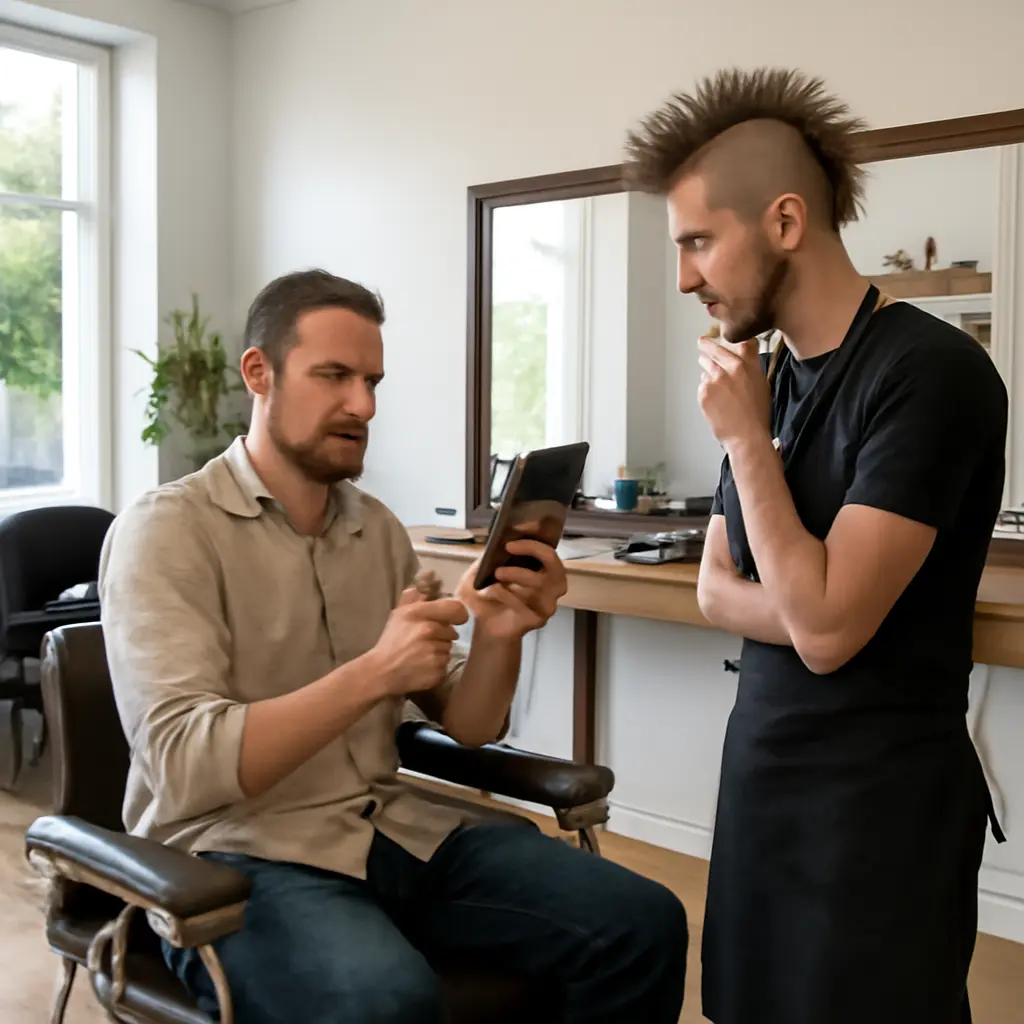

A mohawk is a hairstyle with a strip of longer hair running along the center of the head, usually with the sides cut or shaved short. If you have never had one, the easiest way to start is with a consultation and a conservative, longer-sided version: you can learn how the shape suits you before committing to shaved sides or a dramatic height. A barber or stylist can help you choose a width and length, explain upkeep, and plan a less permanent first step. This guide covers the main mohawk styles, what to expect at your first appointment, styling and maintenance, and practical ways to reduce the risk of an unwanted result.
Choosing a First Mohawk Style and Length
A mohawk is defined by contrast: hair is kept longer in a central band, while the sides are cut shorter. The exact width, length, and degree of contrast are personal choices rather than fixed rules. A first-timer does not have to begin with fully shaved sides or a tall, stiff crest; a gradual cut can preserve options while you get used to the silhouette.
Classic mohawk
A classic mohawk has a distinct strip of longer hair from the forehead toward the back of the head, with closely shaved or clipped sides. It creates the strongest contrast and generally requires the biggest visible commitment. If you are unsure, ask the barber to leave the center longer and start with a less aggressive side length. You can shorten the sides later, but you cannot immediately restore hair that has been shaved.
Faux hawk and taper hawk
A faux hawk suggests the central ridge without removing as much hair from the sides. A taper hawk blends the sides gradually rather than creating a hard, bare contrast. These versions can be useful first steps if you want a mohawk-inspired shape that is easier to wear in different settings. Ask your stylist to describe how the sides will look when the hair is down and how the cut will grow out.
Choosing width and height
The central strip’s width affects the overall impression: a narrower strip looks sharper, while a wider one can feel softer and may be easier to style casually. Height depends on the length and texture of the center hair, as well as the product and technique used. Bring reference photos showing both the front and side views, and tell the barber which details you like. A photo is a guide, not a guarantee, because hair density, growth pattern, and texture vary.
Preparing for a First Mohawk Appointment
Preparation means agreeing on the shape before the clippers or scissors come out. The American Academy of Dermatology notes that hair grows about half an inch (1.25 centimeters) per month on average, though the rate varies. That makes a cautious first cut practical: a stylist can remove more hair during the appointment, but regrowth takes time.
Bring references and explain your comfort level
Show two or three examples, ideally including a version you consider too extreme. Explain whether you want shaved sides, a fade, or a taper; how wide you want the center; and whether you need to tie it back or wear it flat. If you are nervous, say so directly and ask the barber to pause before making the sides shorter.
Ask for a staged cut
A staged cut begins with more length left on the sides and center, then adjusts after you see the outline. Ask the professional to establish the central strip first and check its width with you before taking the sides shorter. This approach cannot eliminate the possibility of disappointment, but it gives you a chance to catch misunderstandings early.
Discuss scalp comfort and tools
A close clipper cut can feel different from a razor shave, and a newly exposed scalp may be more noticeable in sunlight, cold, or wind. Tell the barber about scalp sensitivity, skin conditions, or previous irritation. If you choose a very close shave, ask how to care for the skin and whether the requested finish is suitable for your scalp.
Styling and Maintaining a Mohawk
Styling means shaping the longer center into the look you want, while maintenance means keeping the sides and overall outline intentional as the hair grows. The routine depends on the style: a soft faux hawk may need little more than a comb and light product, whereas a tall, sharply defined crest takes more time and hold.
Simple styling for beginners
Start with clean, towel-dried hair and use a small amount of a product suited to your hair and desired finish. Work it through the center, then shape the strip with your fingers or a comb. Add more only if needed; excess product can make hair look heavy or stiff. If you use a blow-dryer, keep it moving and follow the device’s safety instructions. Your barber can demonstrate a routine using the tools and products you already own.
Trims and regrowth
Short sides show regrowth quickly, so the clean contrast may soften between visits. There is no universal trim schedule: it depends on how close the sides are cut, how quickly your hair grows, and how precise you want the outline. Ask your barber what interval is realistic for your preferred finish and what the cut will look like as it grows out.
Scalp and sun care
When a cut exposes more scalp than you are used to, protect it from strong sun with shade, a hat when practical, or sunscreen appropriate for the exposed skin. The American Academy of Dermatology recommends broad-spectrum, water-resistant sunscreen with SPF 30 or higher for exposed skin. Follow the product label and reapply as directed, especially after swimming or sweating.
Common First-Timer Mistakes to Avoid
Most avoidable problems come from unclear expectations, an overly ambitious first cut, or underestimating daily styling. A short consultation helps turn “I want a mohawk” into specific instructions about the center strip, sides, finish, and upkeep.
- Do not rely on a single photo without explaining which features you want copied.
- Do not assume “mohawk” means the same width or side length to every barber.
- Do not request a close shave before confirming that you are comfortable with exposed scalp and frequent upkeep.
- Do not buy several styling products before learning what your hair needs; ask for a demonstration first.
- Do not judge the finished style only while it is freshly styled at the shop. Ask how to recreate it at home.
Conclusion: Make Your First Mohawk a Reversible Experiment
A first mohawk can be classic, tapered, or faux, and the right starting point depends on how much contrast and daily styling you want. Bring reference images, agree on width and length before cutting, and consider a staged version that leaves room to go shorter later. Ask about upkeep, home styling, and scalp protection so the cut works beyond the first day. If you are ready to try one, book a consultation and describe both your ideal look and your limits before the appointment begins.
Sources: American Academy of Dermatology Association, “Hair loss: Who gets and causes,” https://www.aad.org/public/diseases/hair-loss/causes/18-causes; American Academy of Dermatology Association, “Sunscreen FAQs,” https://www.aad.org/media/stats-sunscreen; Encyclopaedia Britannica, “Mohawk hairstyle,” https://www.britannica.com/topic/Mohawk-hairstyle.