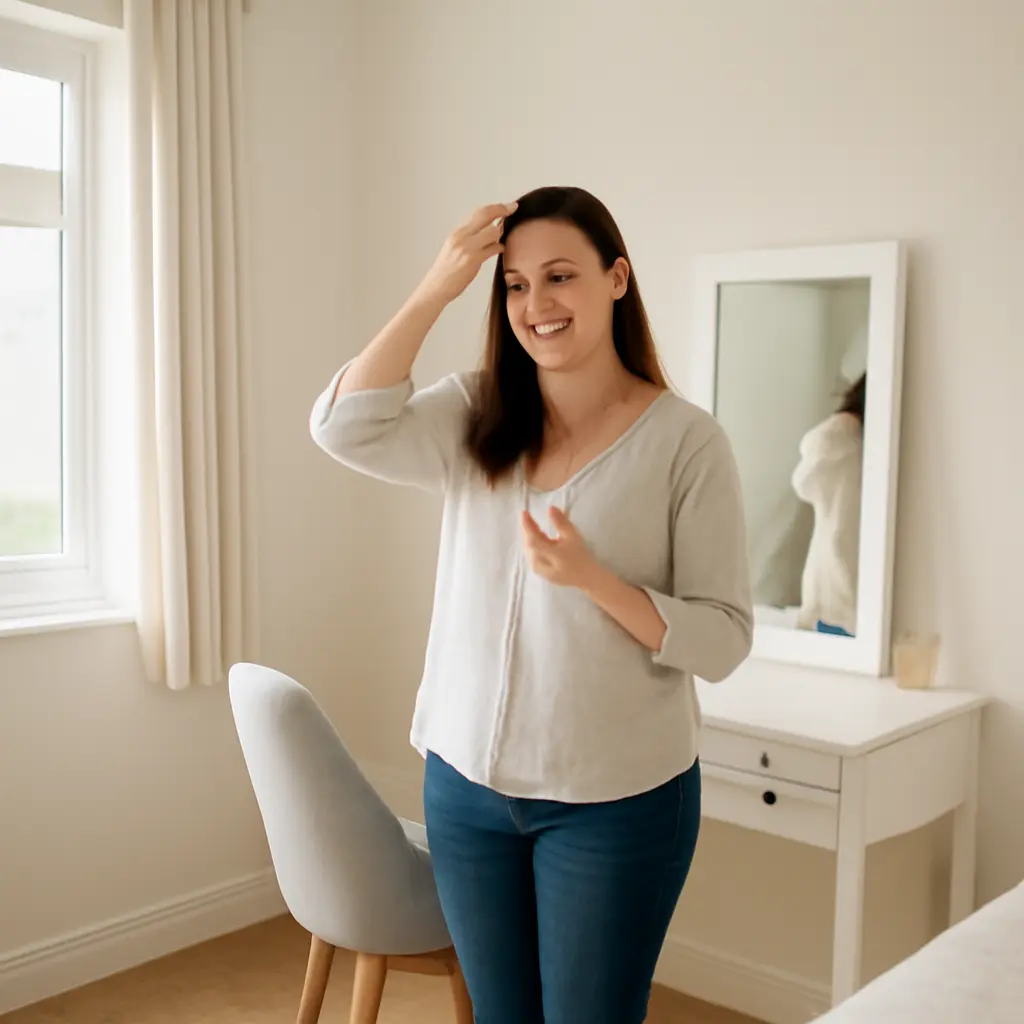

Flyaway hair is made up of short or lifted strands that stand away from the rest of the style; a small amount of hair gel, applied with a clean spoolie or toothbrush, can smooth those strands without coating the whole head. The method works best when you use a lightweight, flexible-hold gel sparingly, apply it in the direction of the hairstyle, and avoid repeatedly brushing once it has begun to dry. That approach reflects a basic styling principle: control the surface hairs while keeping the larger hairstyle intact. The sections below explain why flyaways form, how to choose and apply gel, and how to reduce common problems such as flakes, stiffness, and product buildup.
Flyaway control: what the gel method does
Flyaways are short, loose, or lifted hairs that do not lie smoothly with surrounding strands. They may be new growth, broken hairs, or strands displaced by friction, humidity, or static. Gel helps by forming a thin film around the hair shaft; as that film dries, it holds strands in position. Cosmetic chemist and hair-science author Perry Romanowski describes styling polymers as film-forming ingredients that help hair retain a chosen shape. In practical terms, gel is a styling aid—not a treatment that repairs breakage or changes the hair’s structure.
Common types include crown flyaways, which rise from the top of the head; hairline and baby-hair flyaways; and short broken strands along the part or lengths. Knowing which type you are smoothing helps you use the smallest effective amount. A few hairs along the hairline may need only a trace of gel, while a broader halo of lifted strands may call for careful, light application across the surface.
Why flyaways appear
Hair is more likely to lift when short strands lack the weight or length to stay aligned with longer hair. Dry air and friction can also encourage static. The American Academy of Dermatology notes that rough handling and damaging styling practices can contribute to hair breakage; gentler detangling and reduced heat exposure help limit avoidable damage. Gel can temporarily lay down visible strands, but recurring flyaways caused by breakage are best addressed by reducing friction and harsh styling rather than applying more product.
What gel contributes
Hair gels typically contain water, styling polymers, and other ingredients that affect texture, drying, and finish. Once applied, the styling film helps keep hair in place. Flexible-hold formulas are generally a useful starting point for flyaway control because they can smooth short hairs without the firm, shell-like finish some strong-hold products leave. Product results vary by formula, hair texture, humidity, and how much gel is used; there is no single amount that suits everyone.
The gel method: a precise application routine
The key is to transfer a tiny amount of gel to the flyaways rather than spreading a full dose over the hairstyle. A clean spoolie—a small mascara-style brush—or a clean, soft toothbrush offers control. For larger areas, clean fingertips can work, provided the gel is distributed thinly. Use the method on dry or nearly dry styled hair unless the product label gives different instructions.
Step-by-step smoothing
- Finish styling and let the hair cool or dry. This makes it easier to see which strands actually need control.
- Put a small dab of gel on the back of your hand. Lightly touch the spoolie or toothbrush to it; the bristles should have a thin coating, not a visible lump.
- Brush the flyaways gently in the direction they naturally lie. For the crown, use short, light strokes; at the hairline, follow the shape of the style without pulling the hairs tightly.
- For a few isolated strands, use a fingertip to press them into place or guide them with the brush.
- Let the gel dry without touching or repeatedly brushing the area. If the result looks stiff, once it is fully dry, gently tap the surface with clean fingertips.
A simple visual check can help: compare the treated area with an untreated section under the same light. The goal is a smoother outline, not a wet-looking patch or a rigid strip of hair. If the strands still lift, add only a little more gel to the brush instead of applying a large amount directly to the hair.
Choosing a gel for the finish you want
For a natural finish, try a lightweight or flexible-hold gel. For an updo or a style that must stay sharply defined, a stronger-hold product may be more appropriate, but use it sparingly on fine surface hairs. If visible residue is a concern, test the gel on a small section first and check how it dries. Hair-care products can behave differently across hair types, so ingredient lists and marketing terms alone cannot guarantee a particular result.
Adapt the gel method to hair type and hairstyle
The same technique can be adjusted for different textures and styles. Fine hair can look weighed down when too much product is applied, while curls and coils may need flyaways smoothed without disturbing the overall pattern. Work in small sections and treat only the strands that need control.
Fine, straight, or loosely wavy hair
Use a very lightly coated brush and sweep over the surface rather than combing gel through the lengths. This keeps product concentrated on the short lifted strands and lowers the chance of flattening the style. For a ponytail or bun, smooth the hair toward the tie or pin so the finish follows the hairstyle.
Curly and coily hair
For curls and coils, avoid brushing across the curl pattern if that would disrupt definition. Instead, use a fingertip or a very lightly coated brush to press individual surface hairs into place, following the direction of the surrounding curl. If the style is already set, test a discreet area first: extra moisture or product can alter the finish or create visible residue.
Sleek ponytails, buns, and polished styles
For a sleek style, first secure the main shape with the appropriate brush, tie, or pins. Then use the gel method as a finishing step on the hairline and crown. This separates structural styling from detail work and reduces the temptation to coat the entire head in gel just to catch a few flyaways.
Avoid flakes, stiffness, and recurring breakage
Visible flakes and hard patches usually mean the formula or application does not suit the desired finish, or that too much product has accumulated. The first fix is to reduce the amount. If residue persists, try a different formula and avoid layering gel over incompatible styling products; test combinations on a small section before using them throughout the style.
- Use a clean applicator so old product, lint, and oils are not transferred to the hair.
- Do not keep adding gel to a section that has already dried; reworking a dry film can create visible bits or uneven texture.
- Wash styling product out as part of your regular cleansing routine, and follow the product label.
- Handle hair gently when detangling and limit excessive heat or tight, repeated tension if breakage is a concern.
The American Academy of Dermatology advises gentle hair care and cautions that repeated tension from tight hairstyles can contribute to hair loss. If flyaways are accompanied by persistent breakage, thinning, scalp irritation, or sudden changes in hair growth, styling gel is not a substitute for professional advice; consider speaking with a dermatologist.
Conclusion: use less gel, with more control
Flyaways can result from short new growth, breakage, friction, or static, and gel offers temporary control by helping strands stay in place. The most reliable method is simple: choose a suitable hold, apply a trace of product with a clean spoolie or fingertip, smooth in the direction of the style, and let it dry undisturbed. Adapt the technique to your texture, and address recurring breakage with gentler hair-care habits rather than more product. Try the method on a small section first, then adjust the amount until the finish looks smooth but still feels like your hair.
Sources: American Academy of Dermatology Association, Hair styling without damage, https://www.aad.org/public/everyday-care/hair-scalp-care/hair/hair-styling-damage; American Academy of Dermatology Association, Hairstyles that pull can lead to hair loss, https://www.aad.org/public/diseases/hair-loss/causes/hairstyles; Perry Romanowski, The Beauty Brains, hair styling and cosmetic science resources, https://thebeautybrains.com/